

The University of Utah has announced a one-year trial in which a man uses a bionic arm at home. He controls it by thought, and the arm sends the sense of touch back to him. The university calls it the first home trial of the system.
It is an encouraging story, and an early one. Here is what the release says, and what it leaves out.
What was announced
The announcement came at a press conference on 18 September, with a release published on 21 September. The arm is the LUKE Arm, named after Luke Skywalker and based on a prosthesis made by DEKA. Utah’s team adds a direct nerve interface called the BIOS Controller, which turns a prosthetic arm into a neuroprosthesis.
How the arm works
According to the release, the user controls the arm with his thoughts through that nerve interface. It also sends the sensation of touch back to him, which the university says makes the arm feel more like a natural hand.
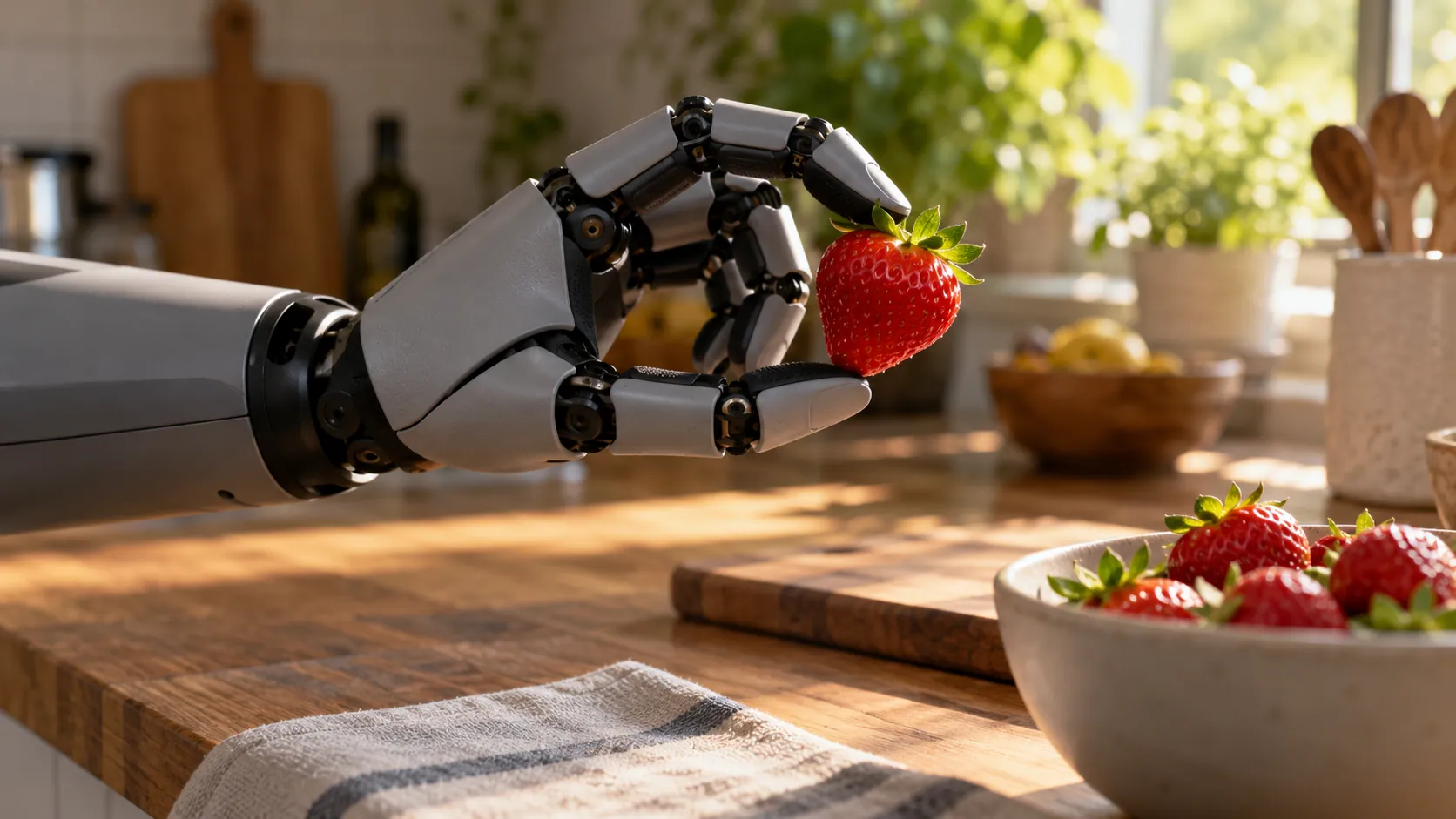
The release does not explain the engineering in detail, so we will not guess at how the signals are read or sent. What it does say is that the touch runs both ways, and that is the point of the project.
Who is taking part
The first home participant is Alexander “Avi” Davidson, from Tampa, Florida. At 16 he fell from a 35-foot telephone pole, about 10.7 metres. He was left paralysed from the waist down, and his left arm was amputated below the elbow. He works as a therapist, a photographer and an activist.
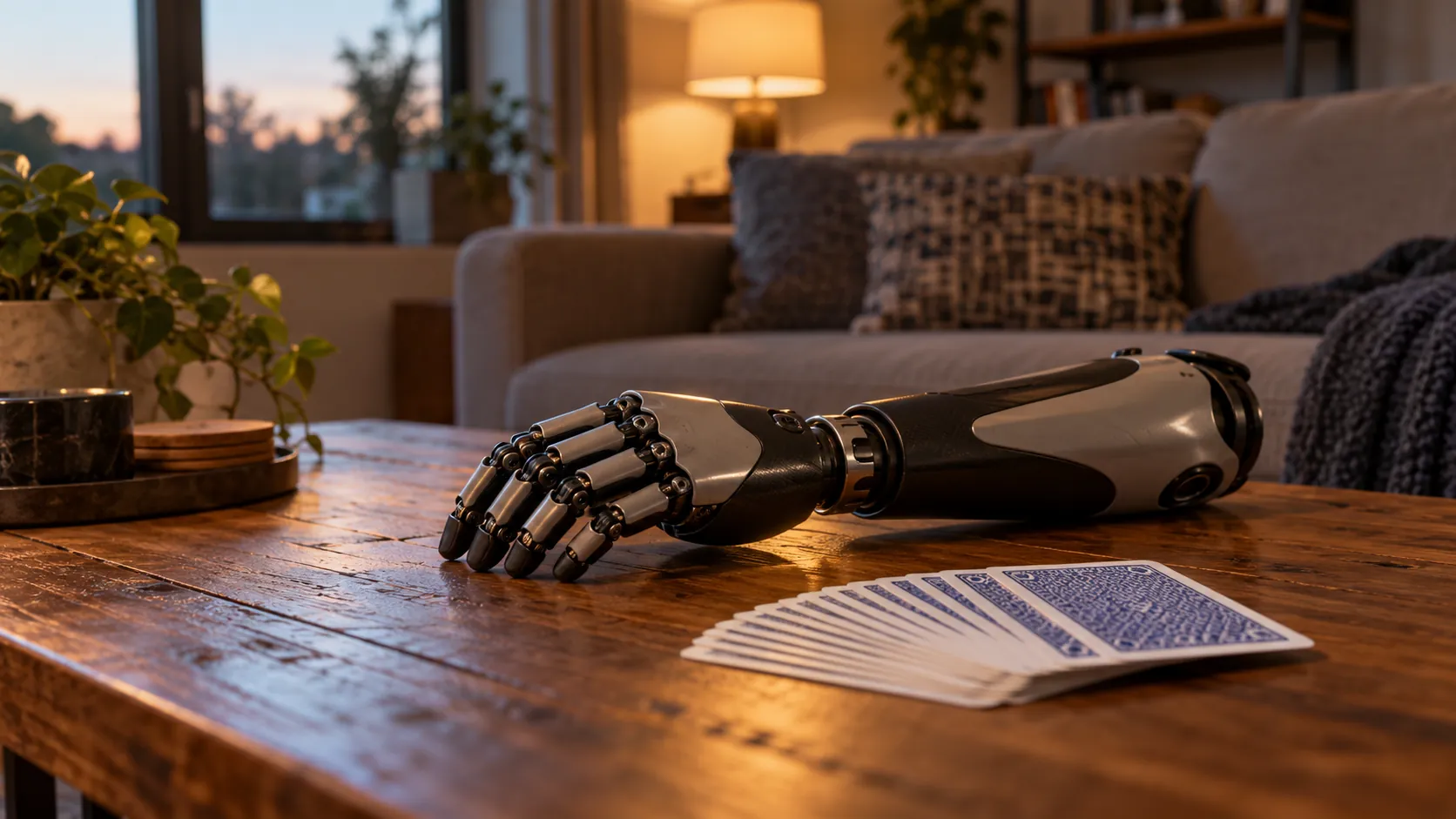
He is the ninth participant in the Utah research, and the first to take the arm home. In his first days at home, the release says, he was able to write, play cards, make a sandwich and hold his wife’s hand.
What the trial is
The trial lasts one year, with the possibility of an extension. It is an early feasibility study, run under an investigational device exemption from the US Food and Drug Administration. That kind of study asks whether everyday use is possible and useful, not whether the device is proven to work.
In March 2024 the FDA gave the nerve interface its Breakthrough Devices designation. BIOS, short for Biologic Input Output Systems, is a spin-out of the university, which licensed it the technology in 2022. Jacob George, a Utah researcher, is the company’s chief scientist. That closeness is worth knowing when you read a release written by the university.
What we do not know
- The release calls the results overwhelmingly positive, but gives no numbers on performance, success rates or safety.
- It does not say how many people the trial will include, what the arm will cost, or when anyone outside a trial could get one.
- The account of Mr Davidson’s first days comes from the university and from him. We found no independent reporting we could open.
This is a research device in a trial. It is not a product you can buy.
Why it matters
Our reading: most prosthetic arms give the user control but little feeling. Touch is the part that makes an arm feel like part of the body, and testing it at home, outside a supervised laboratory, is the step that shows whether it holds up in ordinary life. The trial will have to show that, with data.
For another way of controlling neurons, see how optogenetics switches neurons with light, and for a very different robotic body, Clone Robotics’ Protoclone.
What we could not confirm
We could not check the results independently, and we have not seen the arm. We will update this article if the trial publishes data.



Leave a Reply