

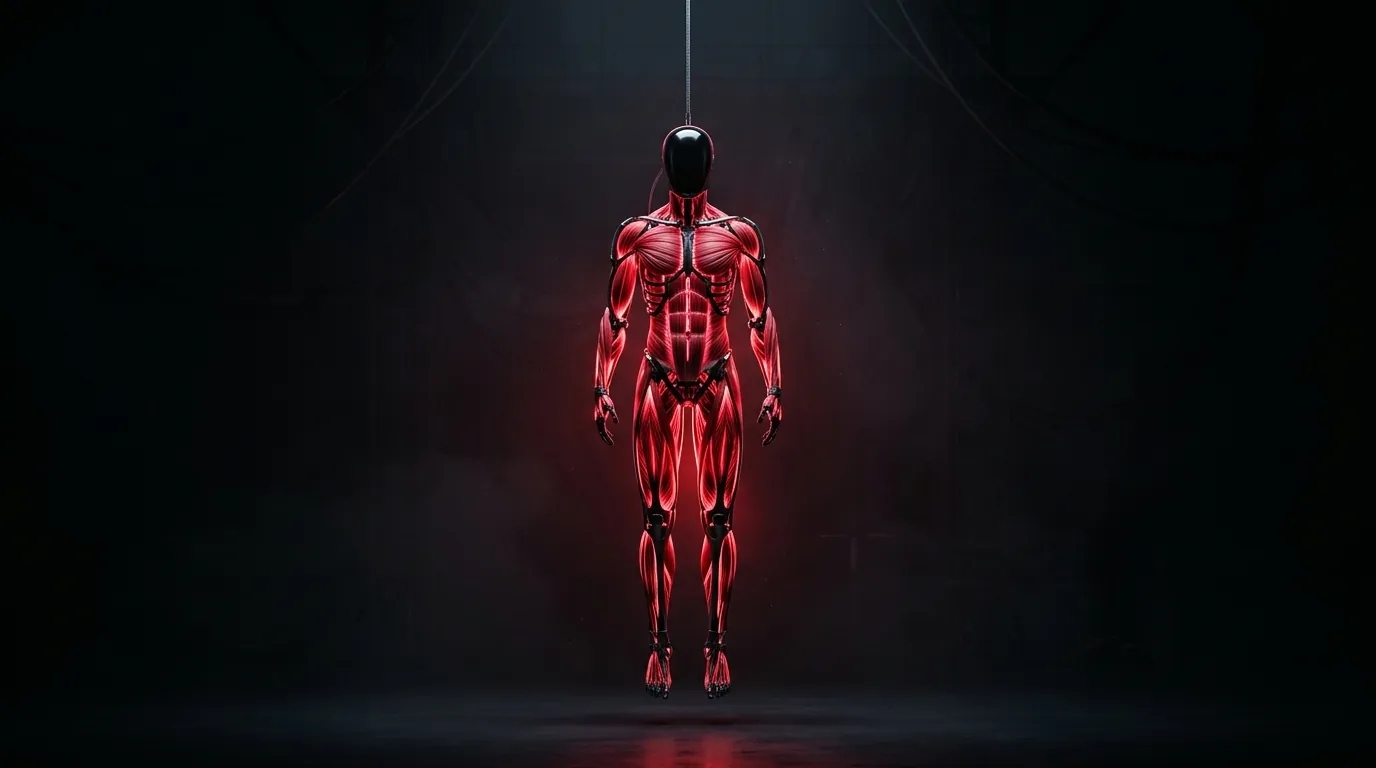
Clone Robotics, a start-up founded in 2021, says it has built an android that moves with about 1,000 artificial muscles instead of electric motors. It is called the Protoclone V1, and clips of it twitching on a frame have been shared millions of times.
What is actually known is narrower than the clips suggest. Here is what the company claims, what has been shown in public and what we could not confirm.
The company
Clone Robotics was founded in 2021 by Dhanush Radhakrishnan, its CEO, and Łukasz Koźlik, its CTO. Heise online calls it a Polish start-up. Another review describes it as a US company with engineering roots in Poland and an office in Mountain View, California. Reports also differ on the city where it is based, so we leave that out.
Radhakrishnan is quoted by Futura-Sciences as saying: “We’re not building tools, we’re building bodies.”
How the Protoclone is meant to work
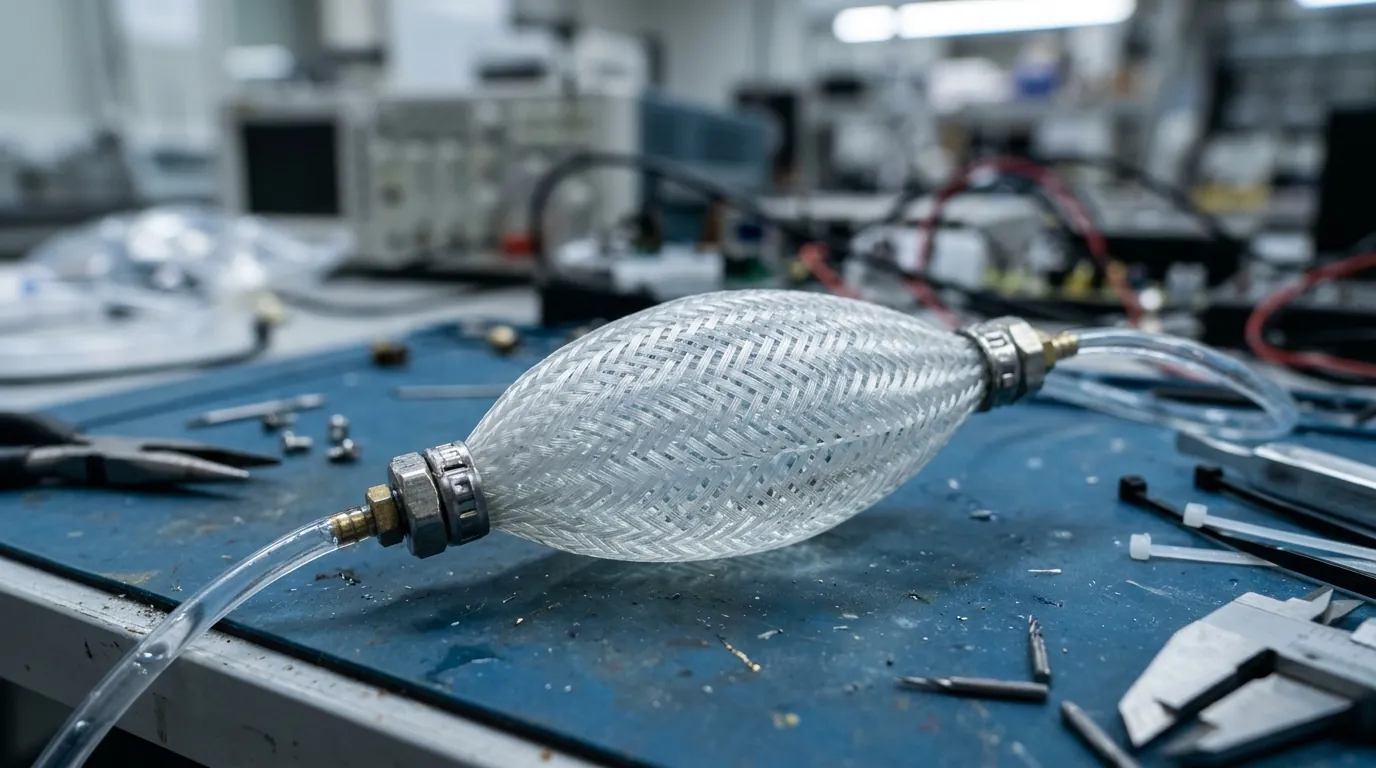
The Protoclone V1 was shown in February 2025 as a “full-body android”. Instead of electric motors in each joint, it uses what Clone calls Myofiber muscles: pressurised mesh tubes that contract when they are filled with fluid.
The skeleton is made of 3D-printed polymer bones modelled on human anatomy, and the company says it copies all 206 human bones. The body has more than 200 degrees of freedom, compared with about 50 for the joints of today’s humanoid robots, according to heise. A water-based cooling system, which the press has called “sweating”, carries heat away through channels in the frame.
The robot has no face, only a black visor, which its makers say avoids the “uncanny valley” effect. It is covered in rubber skin.
Today it runs on air, not water
The Protoclone is currently pneumatic, which means it is driven by compressed air. The plan is to move to a closed hydraulic system that circulates water, with a 500W pump described by Futura-Sciences, but that is a roadmap, not something that exists yet.
R&D World reports that the company admits pneumatic actuators can lag when the robot has to correct its balance quickly, and that the hydraulic versions should allow more autonomous demonstrations.
What it cannot do yet
It cannot walk. In demonstrations it hangs from a frame, and a July 2026 review says every public video it examined shows the robot suspended from a gantry, with no footage of it standing or walking. Heise questions whether the design can ever support walking, since the skeleton would need very strong muscles to carry its full weight.
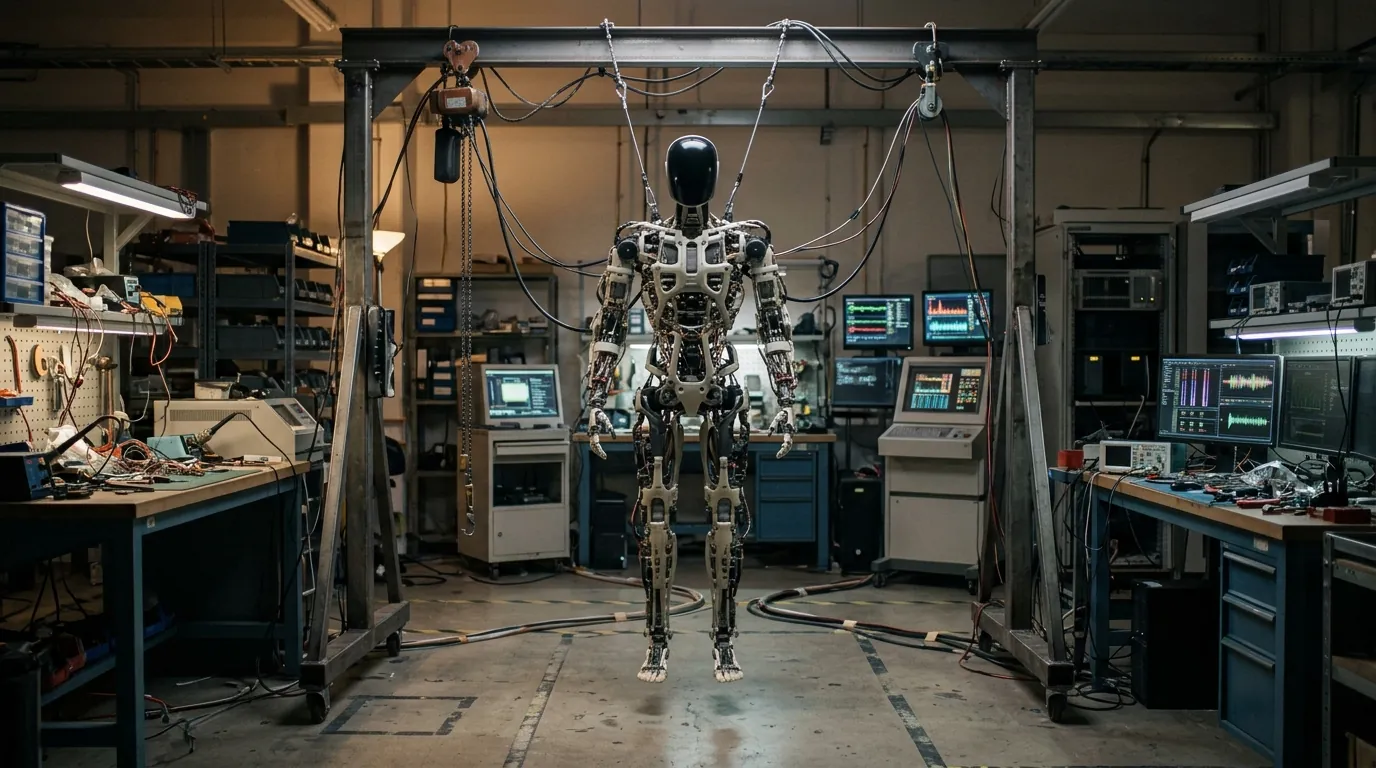
An independent creator filmed the Protoclone in Clone’s lab in September 2025, so the hardware does exist. That visit does not verify the company’s specifications.
Numbers that do not agree
Most figures are the company’s own. Heise reports over 200 inertial and pressure sensors, while Futura-Sciences and other reviews repeat the company’s figure of about 500. Futura-Sciences lists claims of about 3g per Myofiber, a response time under 50 milliseconds and up to 1kg of force each, and none of these has been tested independently.
One review points out that the “1,000 muscles” figure counts fibre strands, not muscles in the human sense.
The product: Clone Alpha
The planned product is the Clone Alpha, a limited run of 279 units with pre-orders promised for 2025 and no price. Its pre-order page claimed it could vacuum, make sandwiches and do laundry.
As of 23 July 2026, a review found that the Clone Alpha could not be ordered, that no price had been published and that the pre-order page still said “Pre-orders available in 2025”, unchanged since December 2024. It found no public evidence that any unit had shipped. Futura-Sciences says the Alpha is entering limited production, so reports disagree. The widely quoted $20,000 is the company’s own target, not a price. Clone’s website, which we opened, does not mention the Protoclone and gives no specifications or price.
An investment campaign on the crowdfunding platform Republic was withdrawn and refunded, according to that review. Funding totals also vary between reports, from $640,000 to about $17 million, with a $50 million round said to be in progress and not confirmed.
What to watch
According to remarks by the founder in March 2026, cited in the July review, Clone plans a more precise torso by the end of 2026, a demonstration of natural walking in 2027 and a first commercial android in 2028. Those are targets.
The test is simple: a robot that stands and walks without a frame, shown on video and checked by someone outside the company. Until then, the Protoclone is an eye-catching prototype. For other attempts to give robots a human body, see our report on Daimon Robotics and robots that feel, and for robotics that has real money behind it, Stryker’s investment in CMR Surgical.


Leave a Reply