

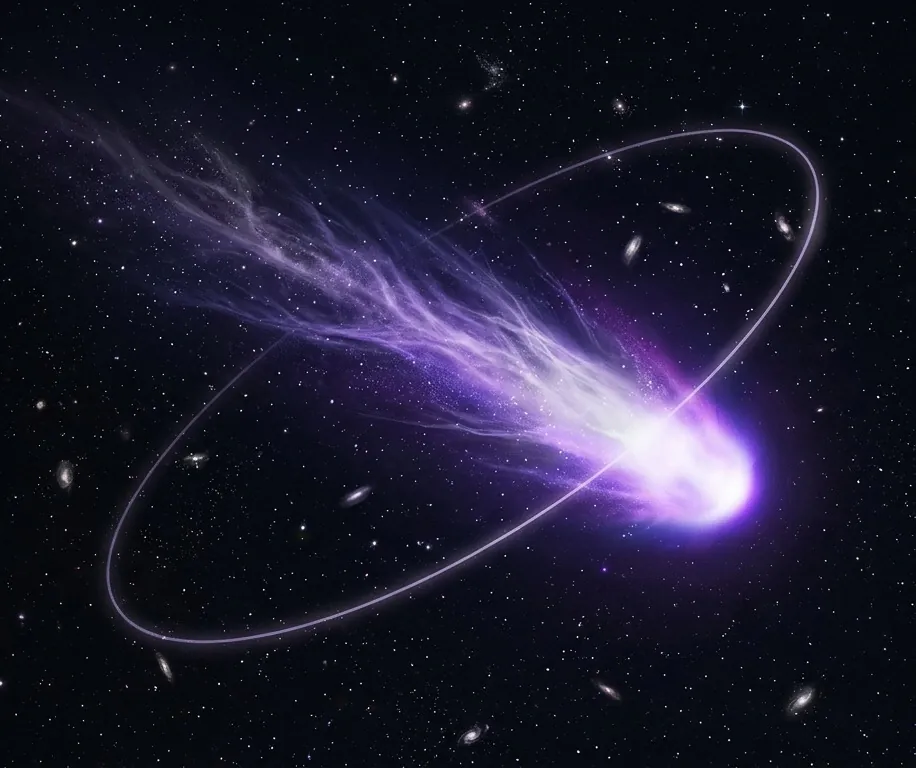
ESA’s Euclid space telescope, built to map galaxies, has discovered a comet that nobody had seen before. It is called C/2026 S1 (Euclid), and it is the first comet that Euclid has found. The comets it had observed earlier were already known.
The find was reported on 19 October. It is a good example of a telescope doing something it was never designed to do.
How it was found
The comet appears in images taken between 16 and 24 September 2026. It was spotted by Mikko Pöntinen, a PhD student at the University of Helsinki, who works with the Solar System Objects Science Working Group of the Euclid Consortium.
He wrote software that flagged a streak across several images, which is what a fast-moving object leaves behind. By predicting where the object would be, he found it in five sets of images. A closer look showed a fuzzy cloud around it, a sign that it is active and shedding dust and gas.
Pöntinen then compared the object with catalogues of known comets and asteroids and found no match. He reported it to the Minor Planet Center, the body that names and tracks small Solar System objects. Follow-up observations from the ground confirmed it, and the comet received its official name.
Where it is
C/2026 S1 is about 1.3 billion kilometres from Earth, roughly the distance between the orbits of Jupiter and Saturn, according to Sci.News. It lies well above the plane in which the planets orbit, on a path that arches over the Milky Way rather than following the planets.
It is a long-period comet. One trip around the Sun takes thousands of years. The exact period is not yet known and should become clearer as more observations arrive. Euclid caught it in its Deep Field North, in the constellation Draco, in five sub-fields and 16 exposures in total.
Why a galaxy telescope found a comet
Euclid’s job is to observe about 1.5 billion galaxies, looking back roughly 10 billion years, to learn how the Universe has expanded and what dark energy does. It is not a comet hunter.
In fact, the way it works makes comet discoveries unlikely. It avoids the dusty band of sky along the plane of the planets, where most comets and asteroids are found, and it usually images each patch of sky only once.
That is why the team calls this a coincidence. This comet’s orbit takes it far above the planets, so it crossed one of Euclid’s fields. “Very few comets are expected to be discovered by Euclid,” said Bruno Altieri, the mission’s archive scientist.
What happens next
The comet is not a suitable target for ESA’s Comet Interceptor, a separate mission being prepared to visit a comet. But the episode is still useful to the teams. Valeria Pettorino, Euclid’s project scientist, said the alert process gives the two missions “a real test case” for working together in future.
The Euclid team hopes other astronomers in the Solar System community will follow the comet up, which should pin down its orbit.
What we do not know yet
We have not found a figure for the comet’s brightness, and nothing suggests it can be seen with amateur equipment. Its orbital period is only described as thousands of years, and at least one other report gives a much longer figure, which we have not been able to check.
We read two reports of the discovery, and both draw on ESA’s material. We did not open ESA’s own release or the Minor Planet Center record. If those carry different numbers, we will update this article.
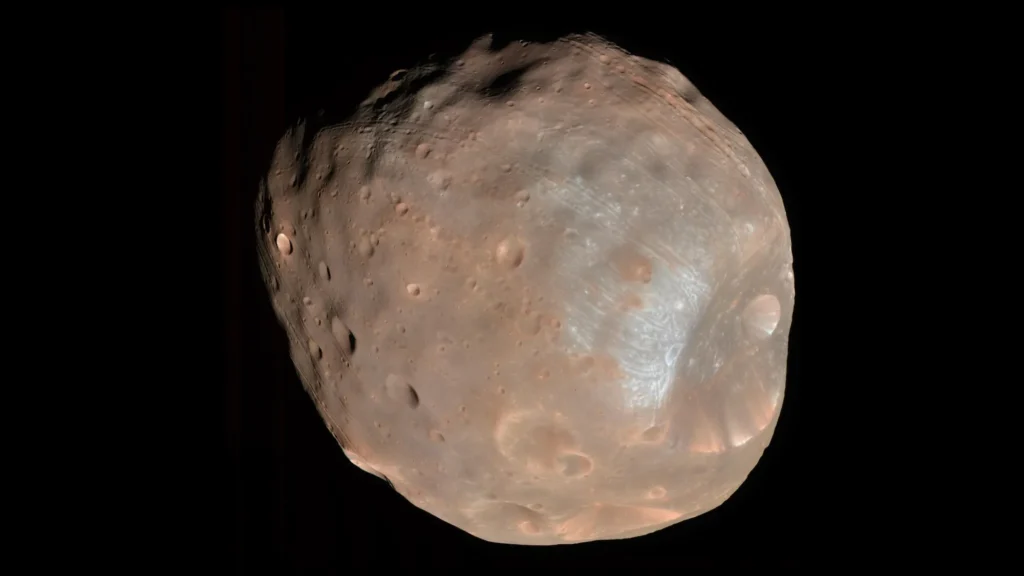
If you like stories about far-off objects, see how Japan’s MMX probe is heading for Mars’s moon Phobos, or how far Voyager 1 has travelled from Earth.


Leave a Reply