

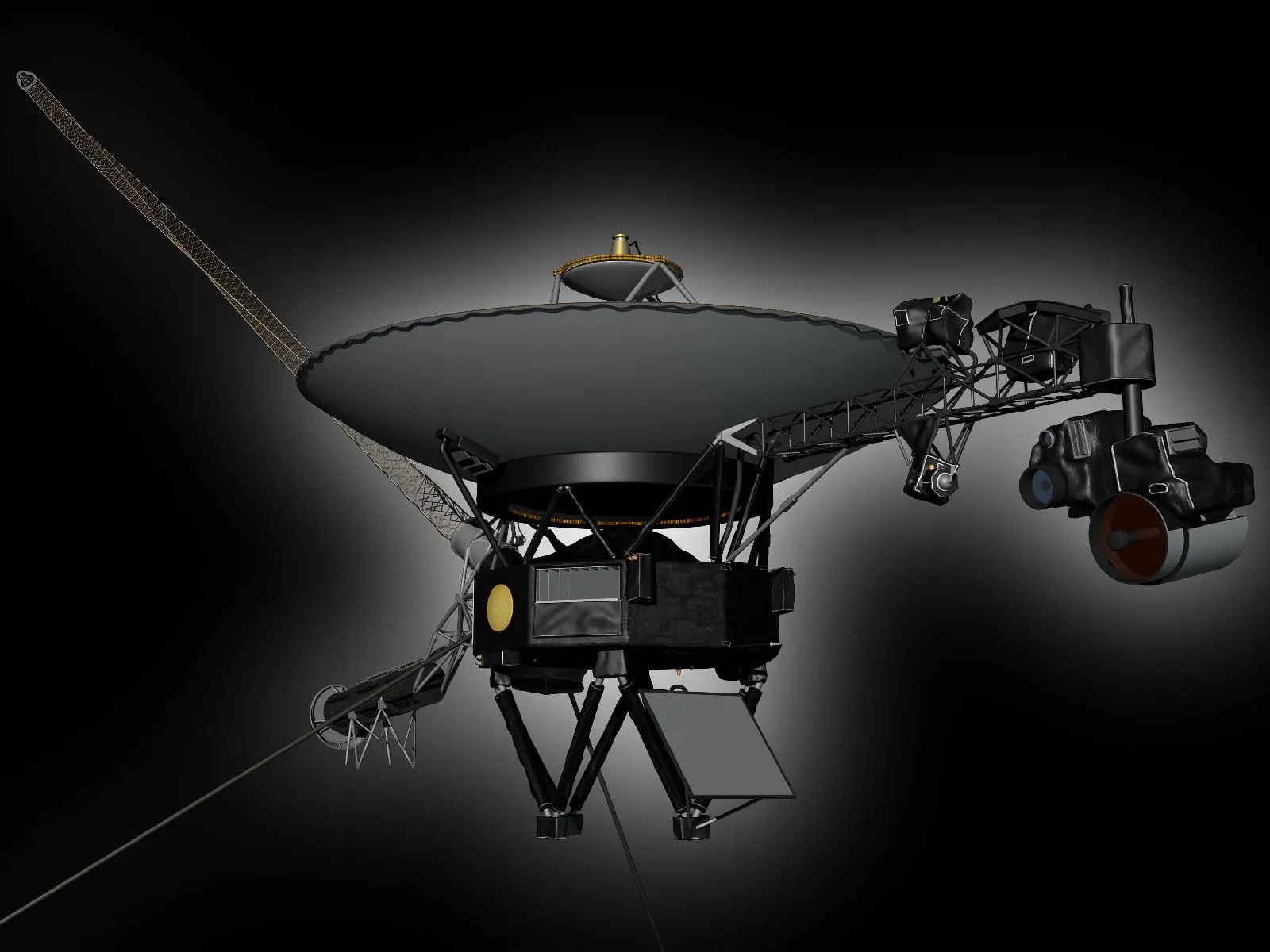
On Wednesday 18 November, at 5:16am Eastern Standard Time (10:16am in the UK), NASA’s Voyager 1 will reach a distance of one light-day from Earth. From that moment, a radio command sent from Earth takes a full day to arrive, and the probe’s reply takes another day to come back.
It is a round number rather than a scientific event, but it puts the scale of the mission into focus. Here is what a light-day is, what Voyager 1 is doing out there and how long it can keep going.
What a light-day is
A light-day is the distance light travels in 24 hours: 25,902,068,356km, or 16,094,799,096 miles, according to NASA. Voyager 1 will be about 26 billion kilometres away, more than four times the distance from the Sun to Pluto, Science News notes.
For comparison, NASA says light takes about 1.3 seconds to reach Earth from the Moon and about 8 minutes 20 seconds from the Sun. The Voyager 1 milestone is a day.
A 1977 probe still travelling
Voyager 1 was launched on 5 September 1977 from Cape Canaveral in Florida, on a Titan IIIE-Centaur rocket. NASA calls it an extended mission. It is the farthest human-made object.
On speed, NASA’s own pages disagree: the text says nearly 38,000mph (61,000km/h), while a photo caption says around 35,000mph (56,000km/h). Its mission page also still lists a distance and speed dated August 2024, so we have no reliable current figure for either.
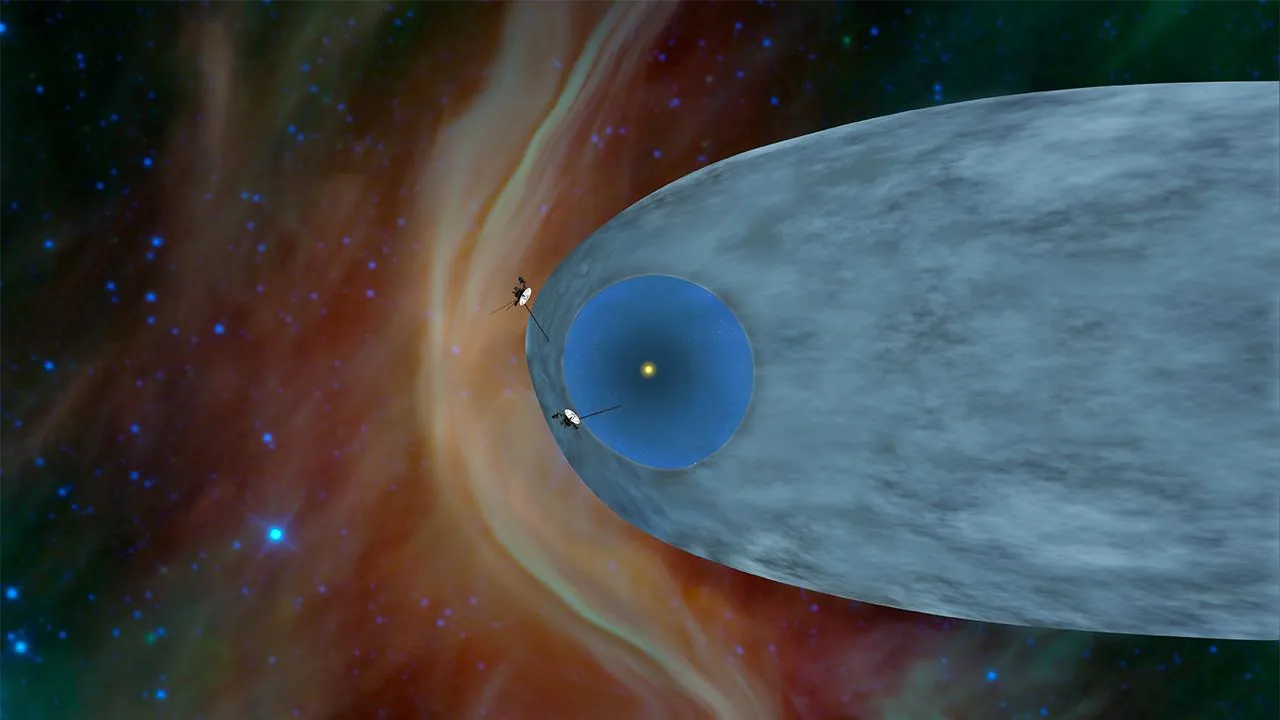
The probe crossed the heliopause, the edge of the Sun’s bubble of particles and magnetic field, on 25 August 2012, about 18 billion km from the Sun. It was the first spacecraft to leave the heliosphere and measure the space beyond. Earlier, in December 2004, it reached the termination shock and entered the outer heliosphere.
What it still measures
Voyager 1’s cameras were turned off in 1990, just after it took the “Pale Blue Dot” picture of Earth, to save power. Carl Sagan had persuaded mission leaders to take that image, Science News recalls.
The probe still measures magnetic fields and particles. To stretch its power, engineers at NASA’s Jet Propulsion Laboratory switched off one instrument on 17 April. NASA does not say which. Its power comes from three radioisotope generators that each produced about 158 watts at launch, and they weaken over time. Scientists estimate the power will run out in 10 to 15 years, Science News reports, after which Voyager 1 can no longer send data.
Questions about the edge of the Solar System
The boundary is not a sharp line. Physicist Jeewoo Park of NASA’s Goddard Space Flight Center told Science News that the heliopause “is not very sharp or very thin.” The magnetic field strength and particle density around Voyager 1 have spiked four times, most recently in mid-2020, and nobody knows why.
Scientists also do not know where pure interstellar space begins, or what shape the heliosphere has. Proposals range from a comet to a sphere to a croissant. Two other spacecraft may help: the Interstellar Boundary Explorer, launched in 2008, and the Interstellar Mapping and Acceleration Probe, launched in 2025.
Jamie Rankin, a Princeton physicist, described the data as coming from places “nobody’s ever explored before.” Linda Spilker, the Voyager head scientist at JPL, calls the mission “multi-generational.”
A message for whoever finds it
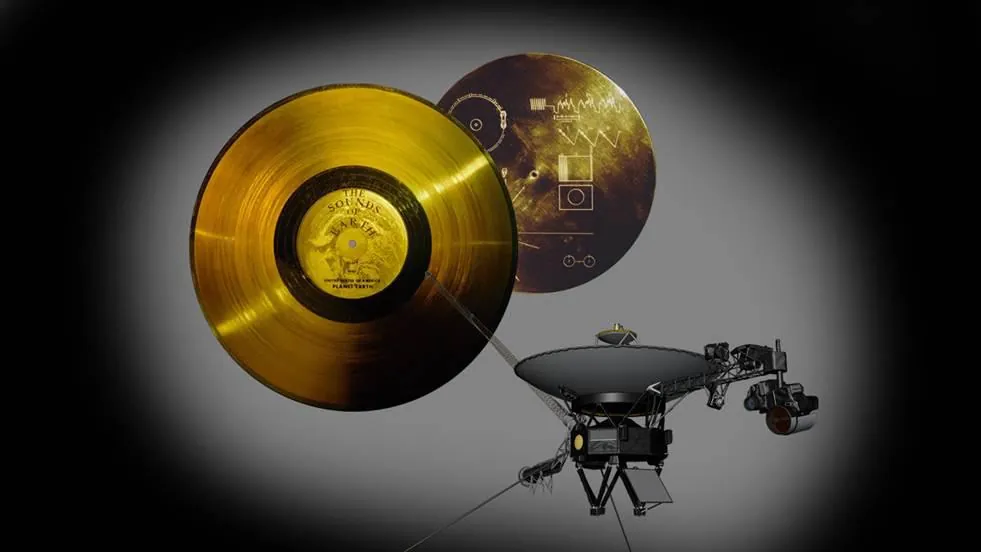
Each Voyager carries a Golden Record, a 30cm gold-plated copper disc. NASA says it holds greetings in 55 languages, 35 sounds from Earth, about 90 minutes of music and 115 images.
Its next close pass of a star is a very long way off. Science News says it will pass near Gliese 445 in about 44,000 years. Voyager 2 will come within 700 light-days of Ross 248 in about 42,000 years.
What happens on 18 November
Nothing visible changes at 5:16am EST. The probe will keep returning its measurements, each delayed by almost a day. NASA is counting down to the moment on its mission page, which was last updated on 15 October.
We do not have a current speed or distance from NASA, and the power estimate is Science News’s. We will update this article after the milestone.
Images from NASA, used for editorial purposes. Their use does not imply NASA endorsement of Ctrl + Alt News.


Leave a Reply