

A new analysis of material from the asteroid Bennu suggests it is a hybrid: a body that formed where dust from the inner and the outer Solar System mixed. The researchers also propose that the young Jupiter helped make that mixing possible.
The study, led by Maria Schönbächler’s team at ETH Zurich, appeared in the journal Science Advances and was first reported by the university on 24 September. Coverage resurfaced on 24 October, so this is not brand-new news, but it is a good moment to separate what the samples show from what is still a proposal.
The samples
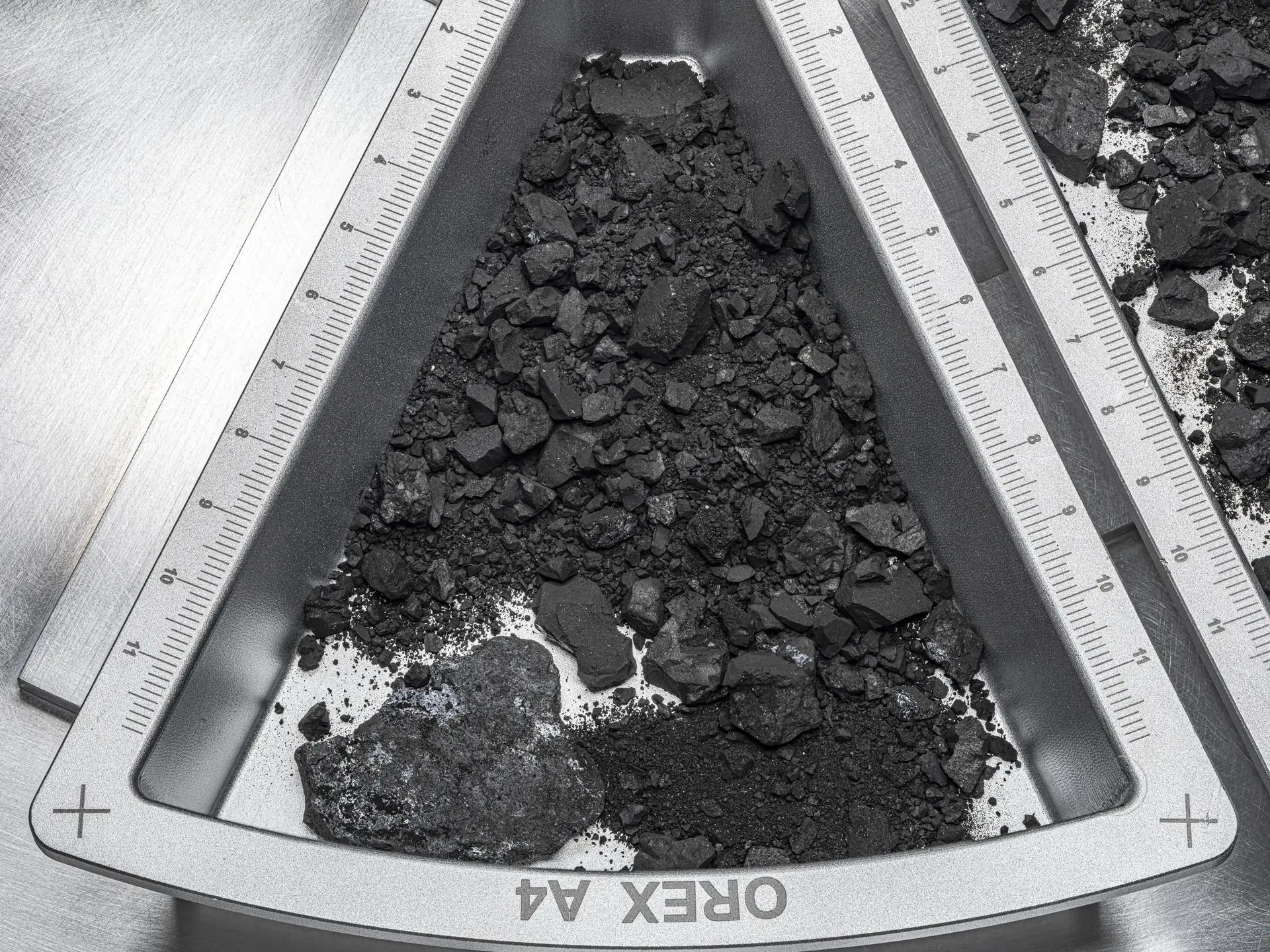
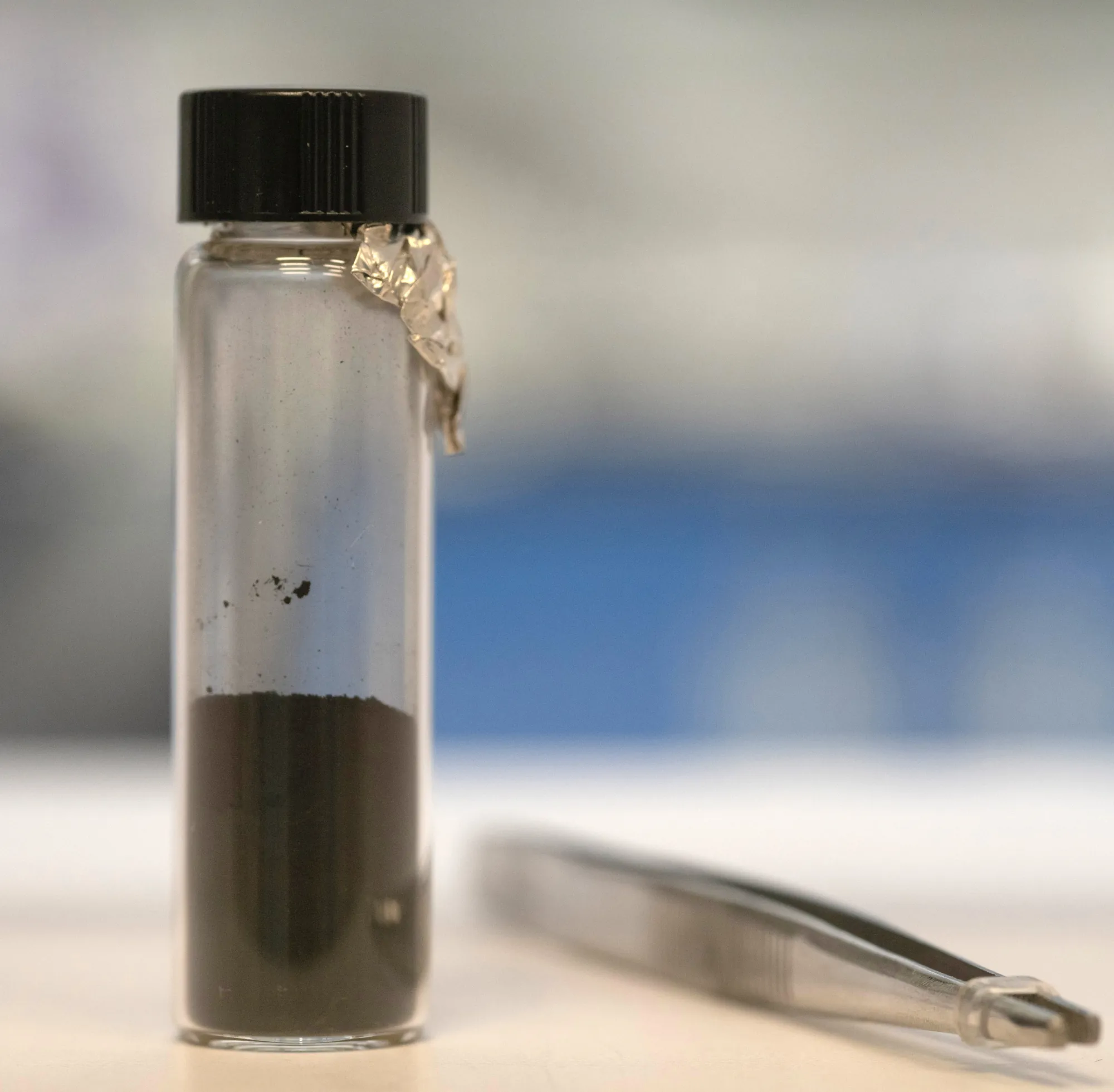
NASA’s OSIRIS-REx mission collected material from Bennu and brought it back in 2023. The sample capsule landed in the Utah desert on 23 September that year, carrying about 120 grams. Half a gram went to Schönbächler’s laboratory at ETH Zurich, a Swiss university.
What the researchers measured
The team measured isotopes of iron, titanium and chromium. Isotopes are forms of an element with different numbers of neutrons, and their ratios work like a chemical fingerprint that can show where material formed.
What the fingerprint shows
Iron and titanium are spread fairly evenly through Bennu’s material. The more important finding is that Bennu’s fingerprint is close to that of the asteroid Ryugu, which Japan’s Hayabusa2 mission sampled, and to CI meteorites. These are rare, carbon-rich meteorites that have changed very little since they formed. The three appear to come from the same reservoir of ancient cosmic dust, and they differ markedly from other known asteroids, meteorite groups and planets.
A hybrid, near the water-ice line
The researchers’ most likely scenario is that Bennu, Ryugu and CI-type material gathered near the water-ice line, around 4.5 billion years ago. That is the distance from the Sun where it is cold enough for water vapour to freeze. There, dust from the inner and outer Solar System mixed, and ice helped the finest particles stick together.
Schönbächler describes Bennu as a hybrid that matches neither the inner nor the outer Solar System cleanly. According to a separate report in Universe Today, the iron isotopes resemble asteroids that formed closer to the Sun, which fits the idea of a mix.
Where Jupiter comes in
The study proposes that Jupiter, which formed within about a million years of the Sun’s birth and grew fast, acted as a barrier. Its gravity would have blocked most of the larger particles from crossing its orbit while letting the fine dust flow past, so that the dust mixed near the ice line. Ice evaporating and condensing again may have concentrated water there.
That is a scenario, not a result. The researchers say they still need to test it, and that it is unclear how much the young Jupiter contributed to the clumping of fine dust.
What is not established
The findings do not show how these materials reached Earth, and the researchers do not know whether other asteroids share Bennu’s isotopic signature. They also need more samples to test the model. This work rests on half a gram of material.
Why it matters
Bennu is rich in water and organic material, which may help explain how the young Earth acquired some of the ingredients of life. Understanding where such asteroids came from also helps scientists work out what the early Solar System looked like.
Schönbächler plans to request samples from Japan’s mission to Phobos, which ScienceDaily says JAXA plans to launch in late October 2026, with the capsule due back in 2031. We have reported on that mission, Japan’s MMX probe, and on the end of NASA’s Swift observatory.


Leave a Reply