

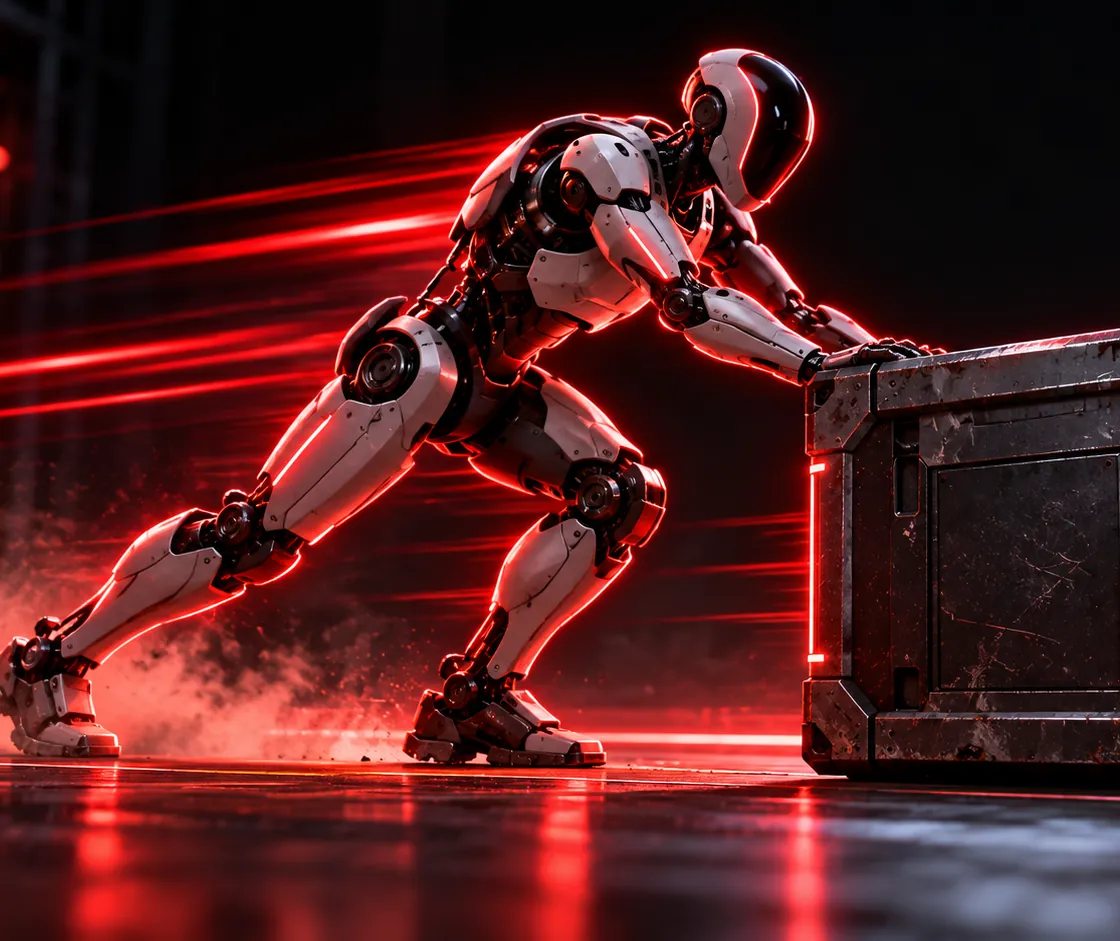
A humanoid robot from KAIST, the Korean research university, has a new video. In it, the robot pushes objects of up to 35 kilograms and lifts loads of up to 20 kilograms.
That sounds like a robot ready for heavy work. A closer look says it is a laboratory demonstration of an idea, and the numbers need care.
What the video shows
KAIST’s Dynamic Robot Control and Design Laboratory, with RAILAB, which built the arms, released the video on 19 October. It is titled “Whole-Body Locomanipulation with KAIST Humanoid v0.9”. Locomanipulation means moving and handling objects at once, using the whole body.
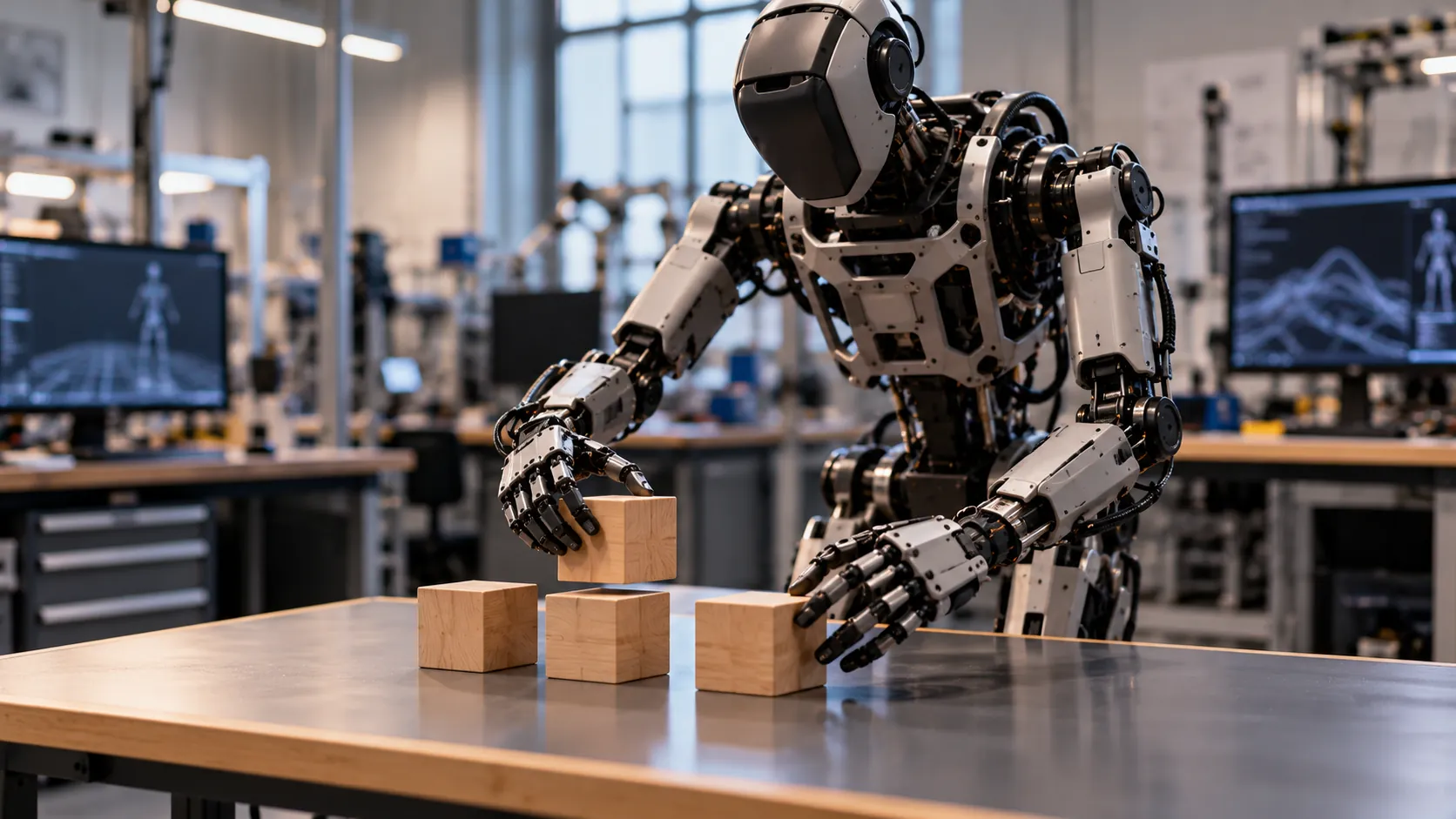
According to Interesting Engineering, the robot pushes objects of up to 35 kg (77.2 lb) and lifts loads of up to 20 kg (44.1 lb). It also uses only onboard vision to arrange objects into the letters “KAIST”. The report says the heavy-object skills were developed with deep reinforcement learning, a method where a system learns by trial and reward, and with human demonstrations.
Two numbers, not one
The 35 kg and the 20 kg should not be read as one rating. Pushing an object along a surface and lifting it off the ground are different tasks. As the report puts it, balance is kept while pushing, while lifting means supporting the weight and controlling posture. The two figures are not comparable, and neither is the robot’s maximum load or what it could lift for long.
What a lab demo does not prove
The report we read says the video does not show:

- that the task works reliably with different objects, surfaces and conditions;
- that the robot can keep working for a long period;
- how the training was set up, how the learning methods share the work, or how the control system is built.
We also found no scientific paper behind the video. So this is a team showing what its robot can do, in conditions it chose.
How it compares
Videos like this are becoming common. We looked at a similar one recently, in what Unitree’s H2-X video shows and what Unitree has not said, and at a humanoid that is still learning to move, Clone Robotics’ Protoclone. The pattern is the same: an impressive clip, and a long list of questions about real work.
What we could not confirm
We read one report in full and did not watch the video ourselves. We have not seen the robot work in person. We will update this article if KAIST publishes a paper or more detail.


Leave a Reply