


A robotic finger covered in living human skin cells is circulating again as if it were new. It dates from 2022, and the researchers’ plans for touch, sweat and hair have not been shown working.
CTRL + ALT News | Robotics | Information checked on 9 November 2026
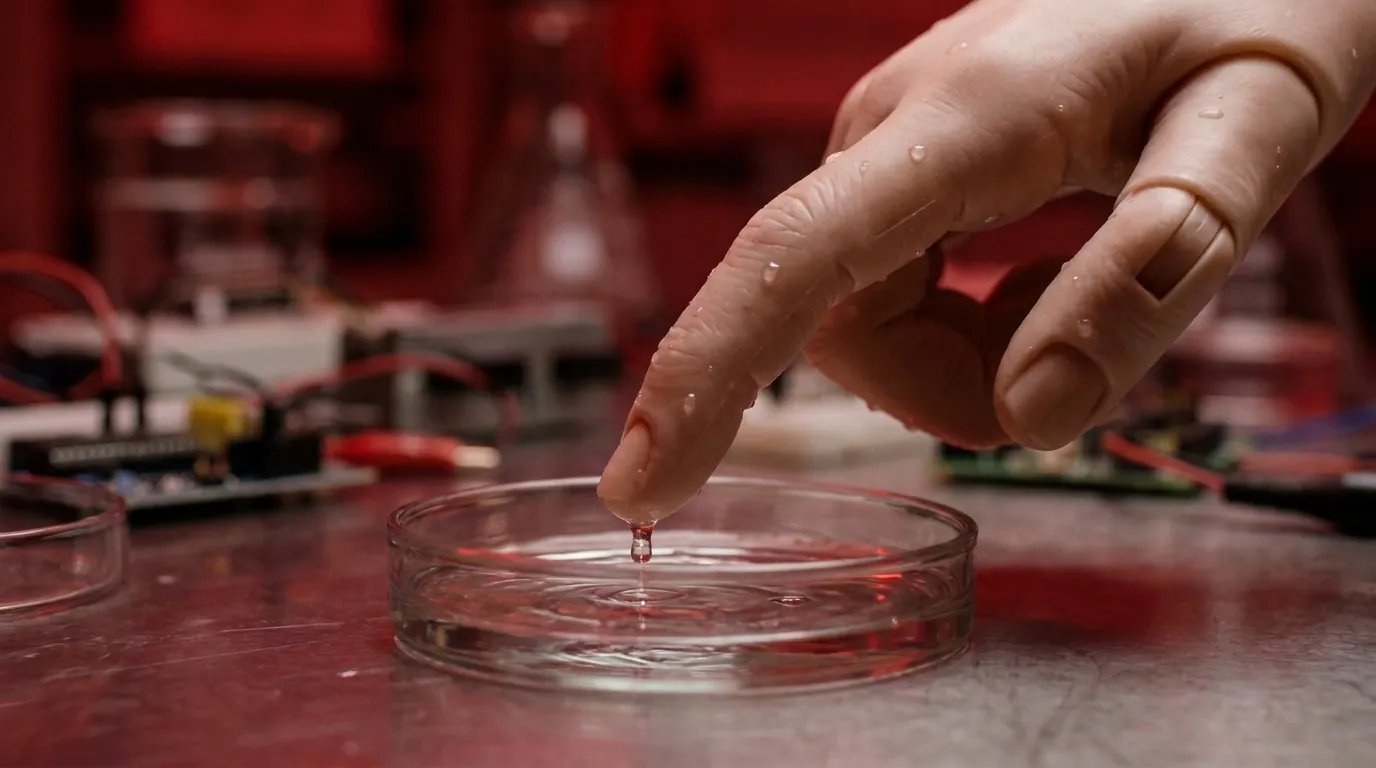
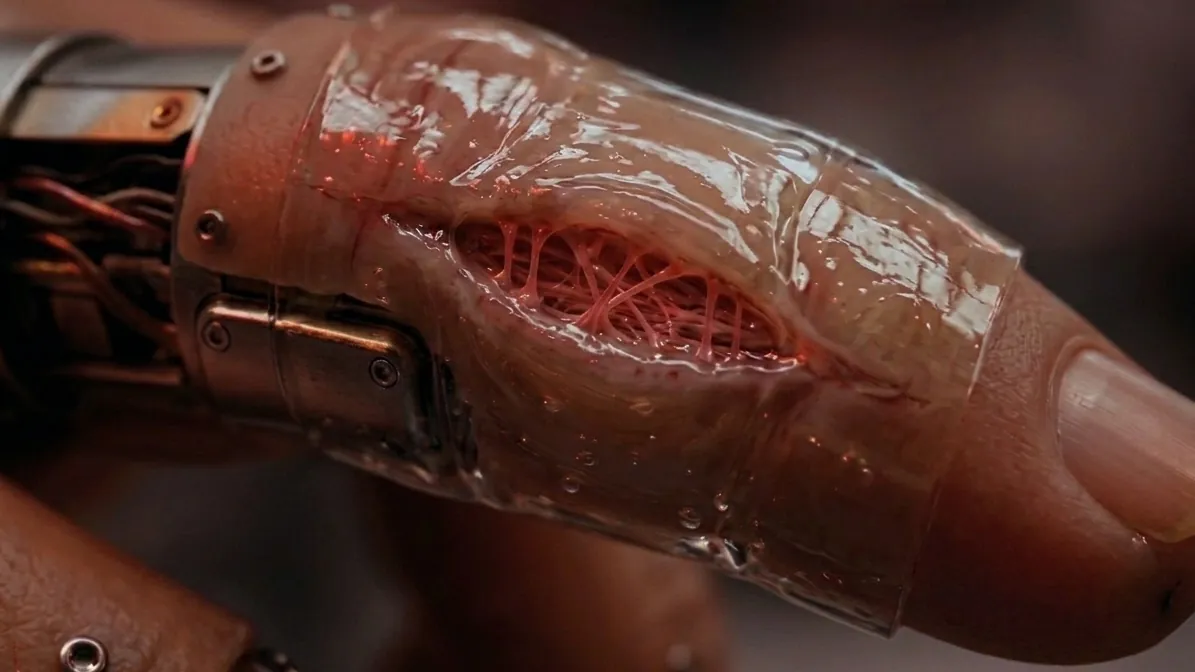
A note on the pictures: the images in this article are AI-generated illustrations that simulate stages of the research. They are not photographs of the experiment.
If you have seen a video or post this autumn about scientists putting “living human skin” on a robot, the work behind it is real, but it is not new. A University of Tokyo team led by Professor Shoji Takeuchi published it in the journal Matter on 9 June 2022. A follow-up with a smiling robot face appeared in 2024. Recaps such as one from Science Times on 6 October 2026 have put it back in front of readers. We found no new experiment from the group in 2026.
This is what the papers and press releases support, and where popular retellings tend to run ahead of them. We could not open the papers themselves, so we rely on the university’s and the publisher’s own releases, which we read in full.
What the team built in 2022
The researchers took a robotic finger with three joints, driven by an electric motor, and grew skin on it. According to the Cell Press release, they first submerged the finger in a solution of collagen and human dermal fibroblasts, the two main components of the skin’s connective tissue. The mixture shrank and conformed tightly to the finger. On top of that layer they added human epidermal keratinocytes, the cells that make up most of skin’s outer layer.
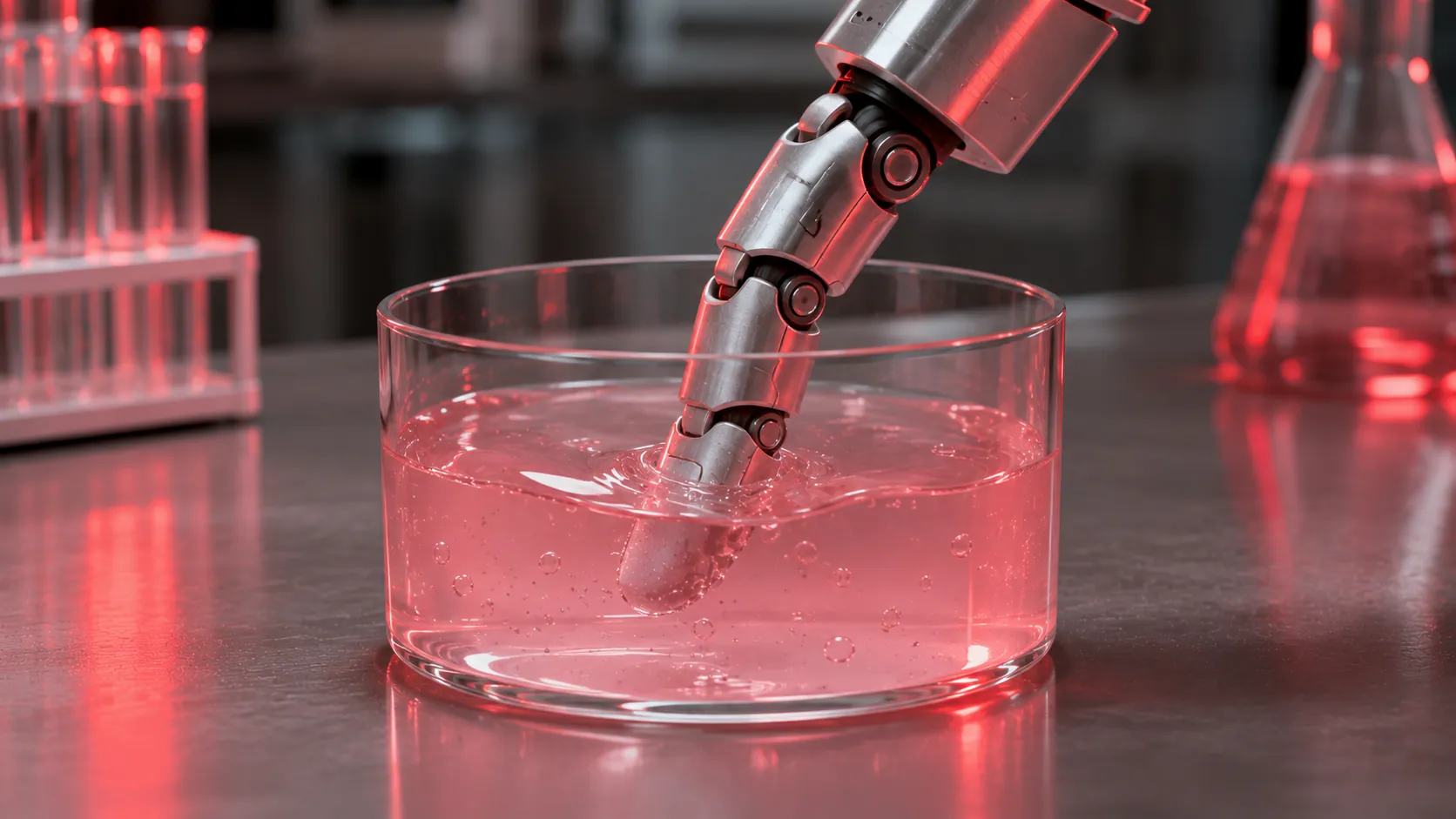
The University of Tokyo describes the result as a collagen hydrogel containing living skin cells, grown directly on the finger rather than cut from a flat sheet and stuck on. That matters, the team says, because seams and imperfect shapes from a sheet would get in the way when the finger bends. The finger needed specially engineered structures to anchor the collagen to it. The university calls it the first time such skin models, long used for cosmetics and drug testing, had been used on a working robot.
What the skin could do
From the Cell Press release, the university’s statement and two recaps:
- Move with the finger. The skin was strong and elastic enough to bear the finger curling and stretching.
- Repel water. The outer layer was thick enough to be lifted with tweezers and repelled water, which the release links to handling light, electrostatically charged material.
- Wrinkle at the joints. Recaps of the study, including Science Times and Yahoo Tech, say the skin forms wrinkles where the finger bends. We could not confirm that in the papers.
- Be repaired. When the researchers cut the skin and covered the cut with a collagen sheet, the sheet gradually merged into the surrounding skin, and the finger kept working through repeated bending. The university’s photographs show this happening in liquid culture medium.
Takeuchi said the finger looks slightly “sweaty” straight out of the culture medium. That describes how it looks, not sweat glands.
What it could not do
The researchers are plain about the limits. The skin is “much weaker than natural skin”, the Cell Press release says, and cannot survive long without a constant supply of nutrients and removal of waste. The repair also needed a collagen patch and the right conditions, so it was assisted healing in a lab, not a robot mending itself in the open. Takeuchi called the work “the first step toward creating robots covered with living skin”.
Nothing in the sources we read shows the skin sensing touch, heat or pain.
The 2024 follow-up: a face that smiles
In June 2024 the group published a second paper, in Cell Reports Physical Science, on a robot face. Science Japan’s summary says the team used the same living-skin approach and solved a different problem: how to attach skin to a moving surface without bulky anchors. They copied the way human skin is tied to the tissue beneath, with a collagen-based mesh known as the skin ligament, by setting gelled skin inside V-shaped holes through the structure. Motor power transmitted through those anchors made the face smile.
The summary also states why the team wants biological skin. Humanoid robots are coated in silicone rubber, which, it says, cannot self-repair, sense or release heat through perspiration. The researchers expect the work to help with humanoids with biological functions and with aesthetic and plastic medicine, such as understanding how wrinkles form.
Claims you may see, and what the sources support
| Claim | What the sources support |
|---|---|
| “It’s a new invention.” | The finger dates from 2022 and the face from 2024. |
| “It heals itself like your skin.” | Repair was shown with a collagen patch in culture medium, not spontaneous healing. |
| “It can sweat and feel.” | Sweat glands, sensory neurons, hair follicles and nails are stated plans. None was shown. |
| “It will do surgery or care for the elderly.” | Not in the sources we read. The university lists advanced manufacturing, cosmetics, pharmaceuticals, regenerative medicine and less animal testing. |
| “It is ready for robots.” | The authors call it a first step, and the skin needs constant nutrients to stay alive. |
A different route to a robot that feels
Giving robots touch is also being tackled without living cells. In 2025 researchers at Cambridge and UCL reported, in Science Robotics, a soft electronic skin: a conductive gel cast in the shape of a hand, read through 32 electrodes at the wrist, with machine learning trained to tell pressure, heat and cuts apart. They said it still needs better durability and tests on real robotic tasks. We found nothing that combines the two approaches.
For related reading, see Protoclone V1, the muscle-powered android that cannot walk yet and what a tactile world model does for robots that feel.
Frequently asked questions
Is a robot covered in living human skin new? No. The University of Tokyo published the finger in June 2022 and the smiling face in June 2024.
Is the skin real human skin? It is cultured skin made from human skin cells, in two layers, grown on the robot. It is much weaker than natural skin and needs a constant nutrient supply.
Can it feel or sweat? Not so far. Touch, sweat glands, hair follicles and nails are planned additions.
Does it heal on its own? Not on its own. In the 2022 test a cut was repaired with a collagen sheet in culture medium.
Could robots like this exist soon? The sources describe a lab prototype. We found no timeline from the researchers.
What we could not confirm
- The two papers themselves, which we could not open.
- That the skin wrinkles at the joints, which comes from recaps, not from a source we could open.
- Any 2026 result from the Tokyo group on sweat, hair or touch.
- How long the skin can survive and work outside culture conditions.
Sources: University of Tokyo, “Robot skin heals”, 10 June 2022; Cell Press release, 9 June 2022, via TechXplore; Science Japan, 26 July 2024; Science Times, 6 October 2026; Yahoo Tech recap; University of Cambridge, via ScienceDaily, 17 June 2025.



Leave a Reply