

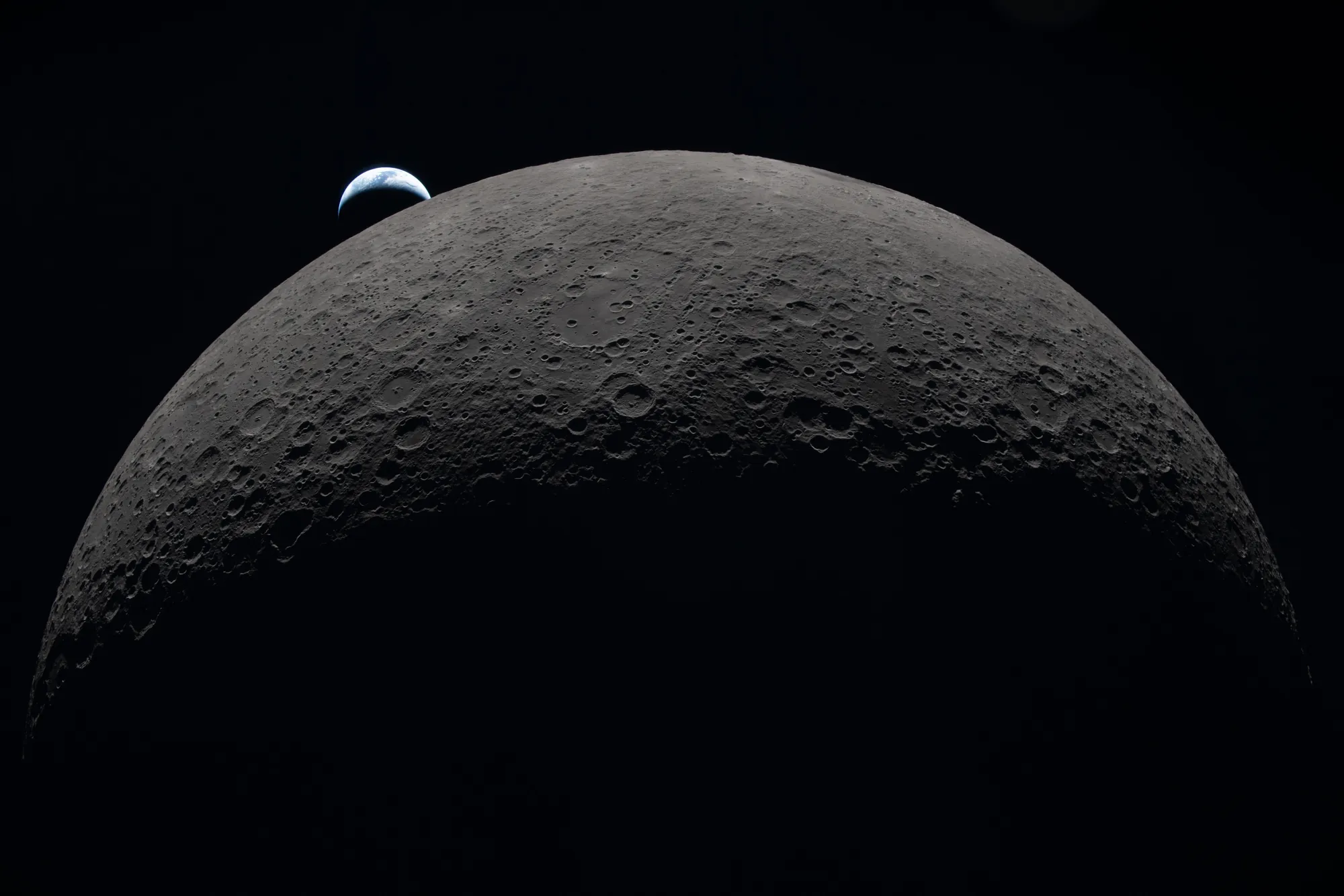
Six months after four astronauts flew around the Moon, NASA has published what they saw. The Artemis II Preliminary Lunar Science Report, released on 7 October, gathers the crew’s photographs, spoken observations, drawings and notes, along with a large data archive that includes material that was not public during the mission.
The headline findings are small and subtle: five very faint flashes, a long eclipse and a palette of surface colours. Here is what they tell us.
The mission in brief
Artemis II sent Reid Wiseman, Victor Glover and Christina Koch of NASA, and Jeremy Hansen of the Canadian Space Agency, around the Moon. It was the first time people had been near the Moon in more than 50 years, according to Science News. The lunar flyby took place on 6 April 2026, with a closest approach of about 4,067 miles (roughly 6,500km) above the surface.
The crew spent about seven hours close to the Moon. Unlike a lander mission, they did not touch down; what they could do was look, photograph and describe.
Five flashes in the dark
The astronauts saw five very faint flashes on the Moon, from about 46,000 miles (roughly 74,000km) away. NASA says the incoming rocks were no more than a couple of inches across. Universe Today puts the limit at 5cm, estimated from the brightness.
Science News, citing planetary scientist Jennifer Heldmann of NASA’s Ames Research Center, goes further: the impactors weighed about 8.5 grams and were just over 4.5cm wide, roughly the size of a golf ball. Heldmann said the crew had probably set a record for the smallest meteoroids ever seen hitting the Moon with the eye. The craters are likely under a metre wide, too small for NASA’s Lunar Reconnaissance Orbiter cameras to spot.
Why does that matter? Direct sightings help scientists judge how often such impacts happen, which bears on how to protect future lunar habitats. Heldmann estimated that the chance of a dangerous impact during a two-week stay on the surface is below one in 10 million.
A 54-minute eclipse
During the flyby the Moon blocked the Sun for 54 minutes. The crew used the time to watch the Sun’s outer atmosphere, the corona, along with interplanetary dust, stars and planets. Koch also described how Earth looked from there: “the Moon is a light sponge and the Earth is a light mirror,” she said, according to Universe Today.
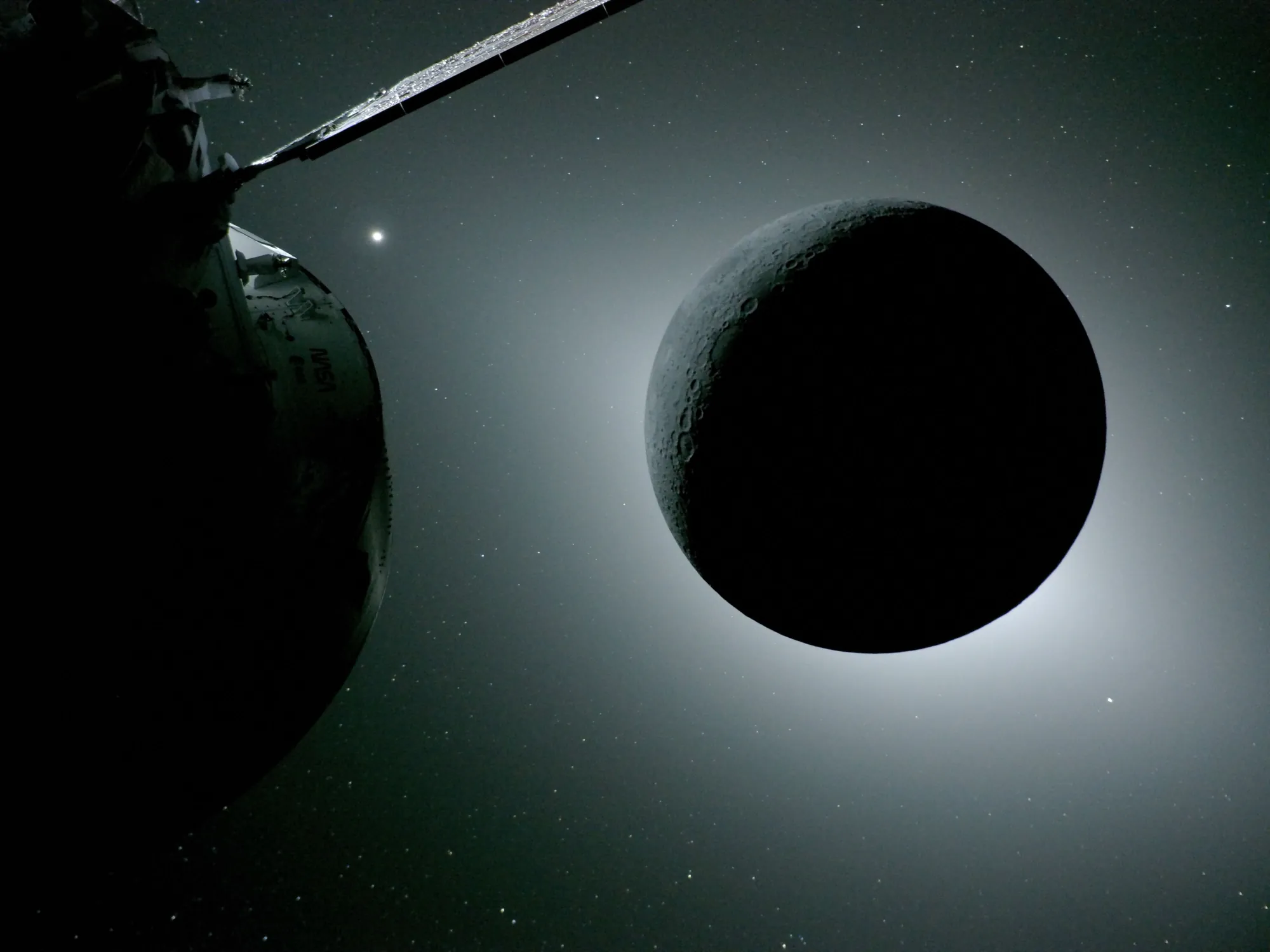
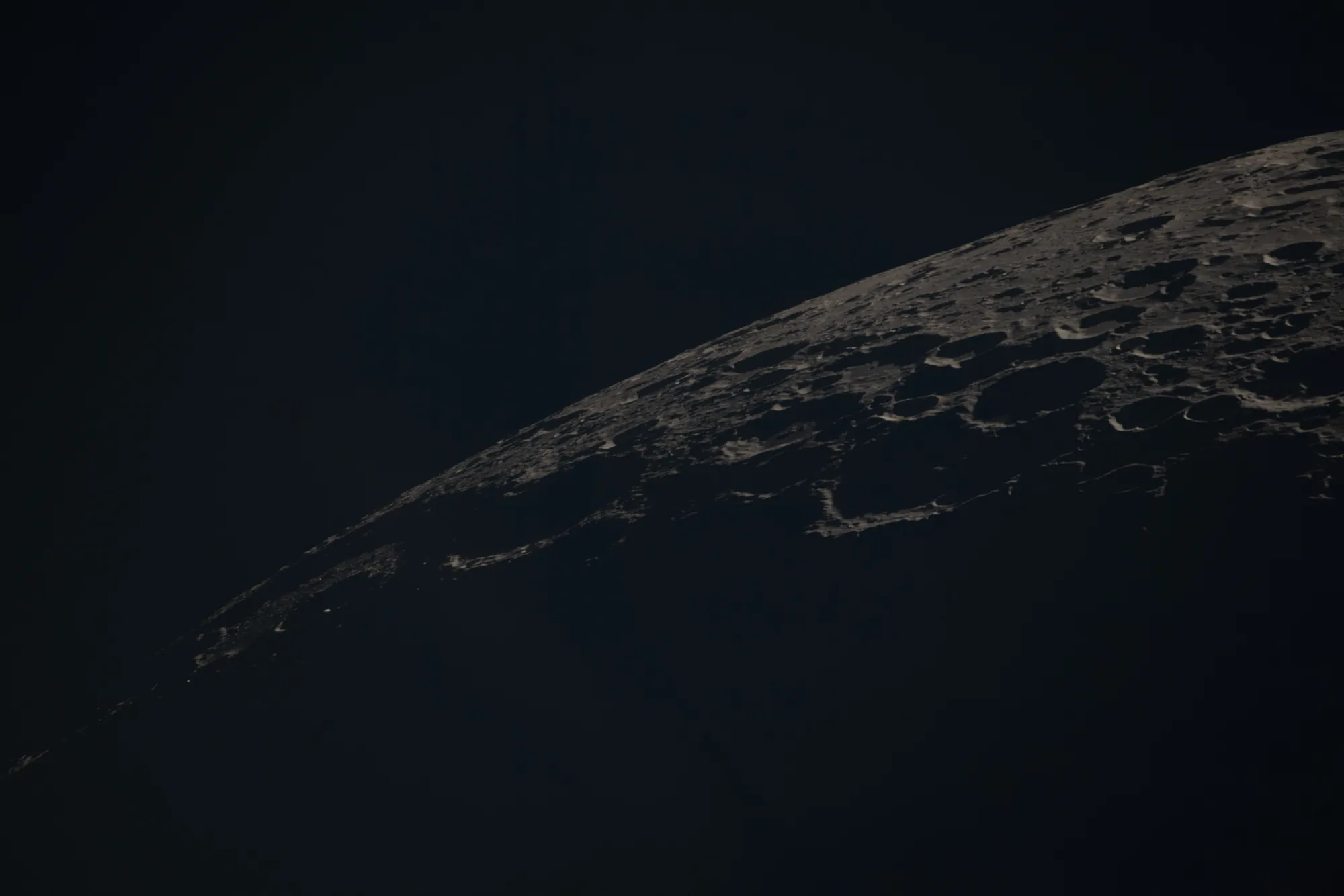
The crew also studied the terminator, the line between day and night, where low sunlight picks out the shape of the ground. Glover called it “just fantastic.” Science News notes that the light there resembles what astronauts may see near the Moon’s south pole.
The colours of the Moon
To the eye the surface looks grey, but the crew reported grey, black, brown, tan, white, green and blue tones. NASA links them to materials:
| Colour seen | What it suggests |
|---|---|
| Blue | Volcanic rock rich in titanium |
| Brown | Varying amounts of iron |
| Green | Volcanic glass or glass formed by impacts |
The observations were set against data from orbiting spacecraft, including the Lunar Reconnaissance Orbiter, which helps scientists place what the crew saw within the Moon’s geology.
What went right and what did not
The science team’s lessons are as interesting as the findings. The cameras were not calibrated before the flight, and the windows were charred during re-entry, so researchers cannot fully recreate how the windows affected the photographs. Pairing the astronauts, with two at the windows and two talking to mission control, produced better science. On future surface missions, where spacesuits make writing hard, descriptive audio logs will matter even more, according to Science News.
Where to find the data
NASA has made the material public. The preliminary science report is a 137.11MB PDF, and there is a 36.69MB operations report and a 7.93MB data guide. The images are in an online album, the audio is in an audio library and the full dataset is in NASA’s Planetary Data System.
What comes next
Artemis IV, planned for 2028, is expected to be the first crewed landing since Apollo, Science News reports. The Artemis II report will shape how that crew observes and records what it sees.
We have read NASA’s summary page, not the full report, so figures such as the impactor’s mass rest on the Science News account. We will update this article if the full report changes any of them.
Images from NASA, used for editorial purposes. Their use does not imply NASA endorsement of Ctrl + Alt News.


Leave a Reply