
A preliminary study says AI analysis of repeated blood pressure readings and a wrist wearable may flag a dangerous spike up to 72 hours early. It is promising, but it is a conference abstract from one hospital in Pakistan.
CTRL + ALT News | Science | Information checked on 8 November 2026
A single blood pressure reading, in the words of the study’s lead author, “only captures one moment in time”. Dr Waleed Razzaq Chaudhry, a resident in internal medicine at the University of Maryland Capital Region Medical Center, and colleagues asked whether repeated readings, a wrist-worn device and AI analysis could show that a hypertensive crisis is coming. According to a news release from the American Heart Association (AHA) dated 2 November 2026, the answer may be yes, up to three days ahead.
The finding is early. It has not been peer reviewed, and it comes from a single hospital in Sindh, Pakistan. Here is what the researchers did, what they report and what is still missing.
What is a hypertensive crisis?
In the release’s definition, a hypertensive crisis is blood pressure higher than 180/120 mm Hg together with sudden damage to organs. The examples it gives are stroke, heart attack, kidney injury, aortic dissection (a tear in the body’s main artery) and pulmonary oedema (fluid in the lungs).
What the researchers did
The study followed 4,190 adults aged 40 to 85, with an average age of 62.4 years; 46% were women. All had stage 2 hypertension, meaning readings of 140/90 mm Hg or higher. They were treated at one hospital in Sindh, Pakistan, and followed from January 2025 to January 2026.
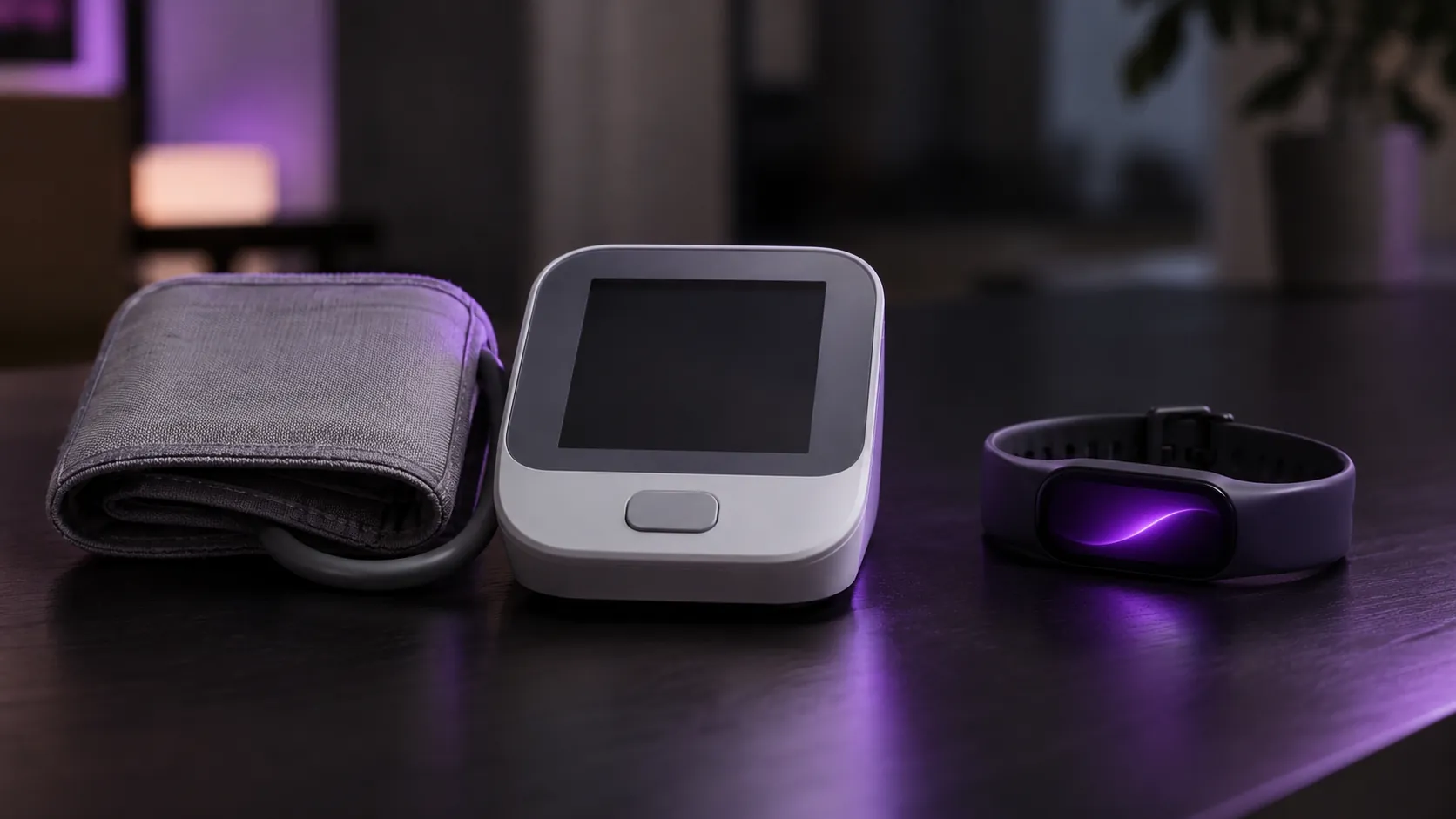
Two kinds of device fed the analysis:
- A portable cuff-based monitor, which took repeated readings through the day and night, including during activity and sleep.
- A wrist-worn device with optical sensors, which recorded cardiovascular signals such as heart rate and heart rate variability.
An AI model then analysed 47 features, including how much blood pressure fell during sleep, how much it rose on waking, how it changed over time and how the heart rate varied. The release does not name the devices or the model.
What they report
Of the 4,190 people, 312 (about 7%) had a total of 418 hypertensive crises. Two patterns stood out:
- Blood pressure that did not fall during sleep went with nearly five times the odds of a crisis in the following hours.
- A rise of more than 35 mm Hg on waking, compared with the night, went with nearly four times the odds.
“Odds” is not the same as risk: it compares how likely an event is in one group with how likely it is in another. The release gives no confidence intervals.
The model, the release says, was effective at telling higher-risk from lower-risk patients up to 72 hours ahead. Among people who triggered an alert, about 32% went on to have a crisis. Among those who did not, 97.4% stayed crisis-free. By our reading, that means roughly two in three alerts were not followed by a crisis. The release does not say over what period these percentages apply.
What happened when doctors acted on the alerts
According to the release, doctors who received an alert contacted the patient, reviewed symptoms and adjusted medication if needed. Where this happened within 24 hours, crises were about 61% lower and emergency department visits about 45% lower than among people who did not get timely intervention.
That comparison is the most eye-catching number, and the one with the least explanation. The release does not say how the groups were formed or how many events each had, so we cannot tell whether the two groups were comparable.
What this study cannot tell us
- It is a conference abstract. The release calls the findings preliminary until a full paper is published.
- It is one hospital in one country. The authors themselves say the approach needs testing in more diverse groups and other health settings.
- Key numbers are missing. The release gives no sensitivity, specificity, number of alerts or design details, such as whether the model was tested on separate data. Funding is not stated in the release either.
- The wrist device did not measure blood pressure here. Pressure came from the cuff; the wrist device recorded heart signals. The release also notes that the AHA’s 2025 scientific statement on cuffless devices recommends upper-arm cuff monitors rather than wrist or finger devices.
Dr Maria Delgado-Lelievre, of the University of Miami, who commented for the AHA, said tools like this should “complement, not replace, clinical decision-making”.
What it means for you
Nothing here shows that a consumer smartwatch can predict a hypertensive crisis. The study does not name any commercial device, and there is no product to buy on the strength of it. If you have high blood pressure, how and when to monitor it is a question for your GP or care team; this article is general information, not medical advice.
The study fits a wider theme: wearables collect health data, and what is done with it matters. We covered one side of that in Withings now charges new users to sync with Apple Health.
Frequently asked questions
Can my smartwatch predict a hypertensive crisis? Nothing in the AHA release shows that. In the study, blood pressure came from an arm cuff and the wrist device recorded heart signals.
Has the study been peer reviewed? No. It is a research abstract presented at the AHA Scientific Sessions in Chicago (6 to 9 November 2026), and the AHA calls it preliminary.
Does it apply to people in the UK? We do not know. All participants were adults treated at one hospital in Pakistan, and the authors say wider testing is needed.
What we could not confirm
- The abstract itself, which the release says differs from its own text.
- How the model was built and validated, and which devices were used.
- The number of alerts, sensitivity, specificity and funding.
- How the groups behind the 61% and 45% figures were formed.
- Any independent view of the results.
Source: American Heart Association news release, via EurekAlert, 2 November 2026.


Leave a Reply