

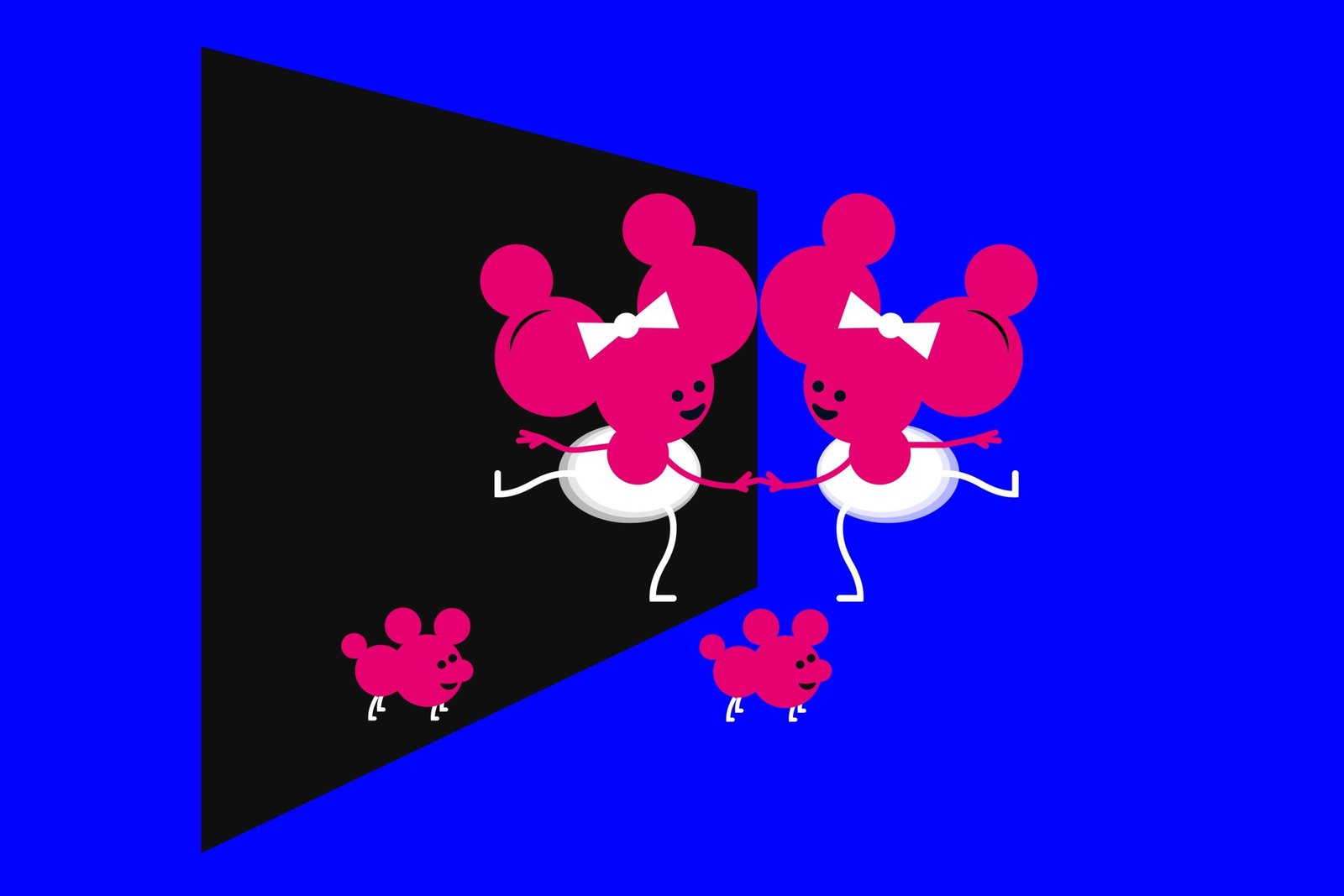
The 2026 Nobel Prize in Chemistry goes to Henri B. Kagan and Kenso Soai, who worked out how chemists can steer a reaction to make just one of a molecule’s two mirror images. The prize was announced on 7 October “for the discovery of non-linear effects and autocatalysis in asymmetric organic synthesis” and is shared equally.
Why mirror images matter
Many molecules come in two forms that are mirror images of each other, like your left and right hands. Amino acids are an example. Life, though, uses only one of them. “Life’s chemistry is what chemists call homochiral,” the Nobel Committee says, from the Greek words for “same” and “hand”: of the two variants of each amino acid, only one is found in the proteins in your cells.
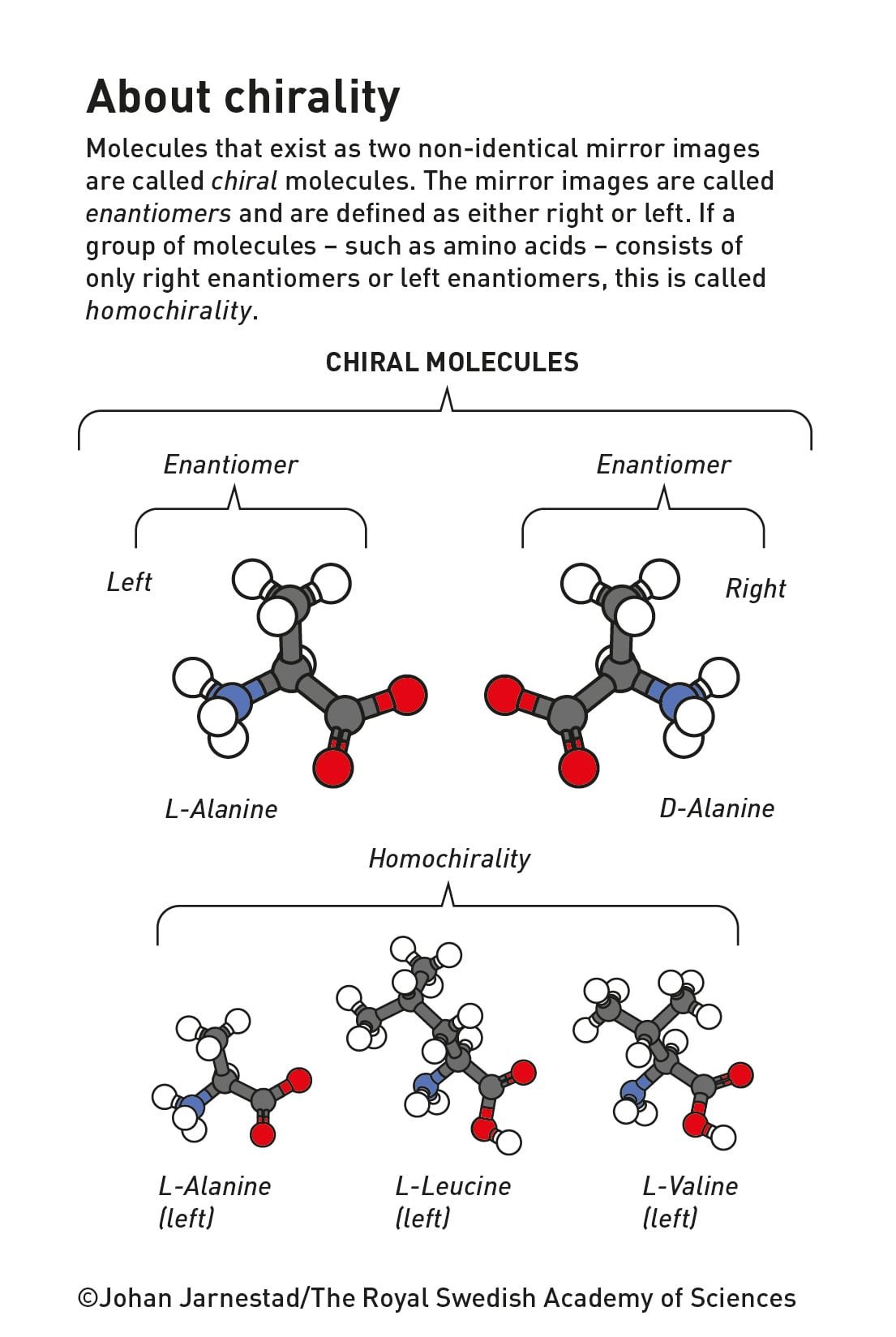
How that one-handedness first appeared has long been a puzzle. When chemists ran reactions that could form two mirror-image molecules, they always got equal amounts of both. That matters beyond curiosity: for a molecule that will interact with living things, such as a medicine, usually only one mirror image has the effect you want.
Two steps
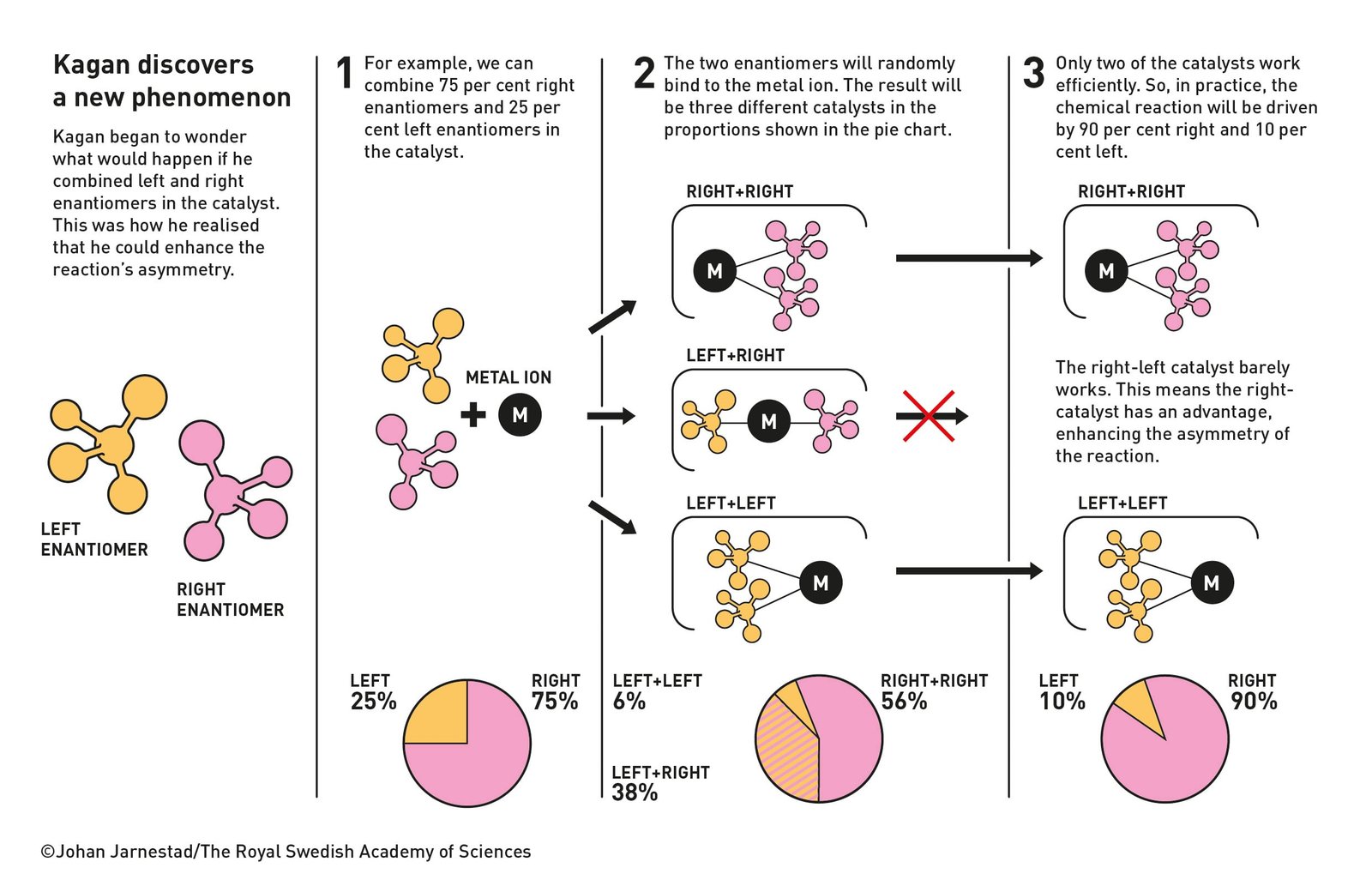
Henri Kagan took the first decisive step in 1986, finding a new way of manipulating chemical reactions that gave a bigger excess of one mirror image than had been thought possible. Chemistry World explains that in some metal-catalysed reactions the imbalance in the product is not simply the same as in the catalyst; it can be larger, which chemists call a non-linear effect.
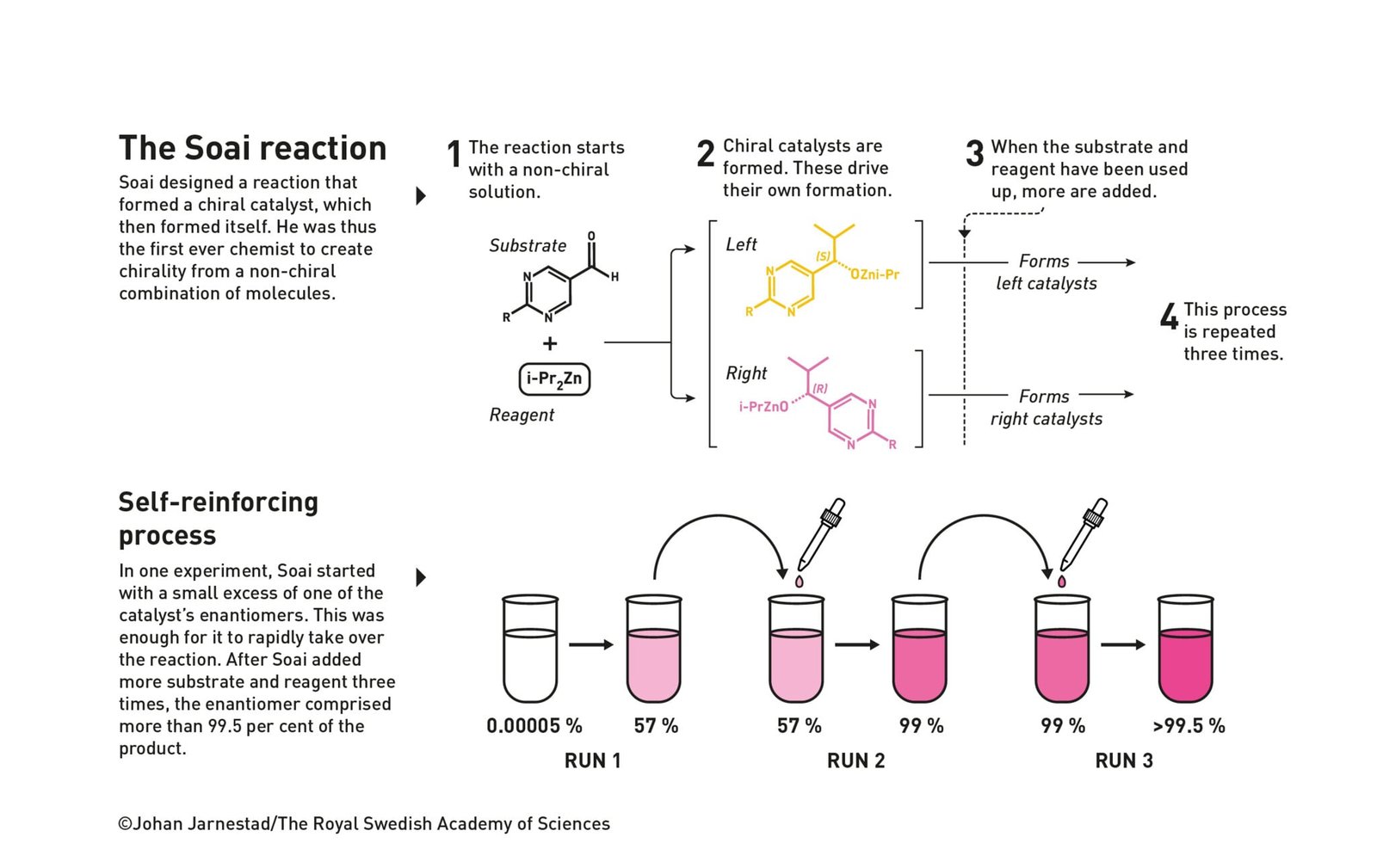
Kenso Soai took the next step. In 1995 he published how he had designed the first reaction with the potential to be homochiral, and in 2003 he succeeded: a reaction in which only one of the two possible mirror images formed. “Other than life itself, no one had previously achieved this feat,” the committee says.
How a tiny imbalance snowballs
The Soai reaction is autocatalytic, meaning the product helps make more of itself. Chemistry World reports that in a 1995 version the imbalance in the product rose from 2% to 55%, and to around 90% after repeated rounds. In another run, a starting imbalance of just 0.00005% ended above 99.5%, an amplification of roughly 630,000 times. The product favours making more of the form that is already in excess, so each cycle magnifies a small difference.
This fits an idea put forward by the physicist Charles Frank in 1953 for how a nearly even mixture could become one-handed. Scott Denmark of the University of Illinois calls the Soai reaction the “only demonstration” of a reaction that meets Frank’s conditions. Daniel Singleton of Texas A&M says that homochirality and self-replication are “two central stumbling blocks for any theory of the origin of life”.
From theory to the factory
The discoveries are useful to people who make drugs. Chemistry World describes work by Erick Carreira’s group at ETH Zurich with the company Lonza on an intermediate for the HIV drug efavirenz, where adding the product to the mixture kept the right form favoured and cut the quantities of other reagents by up to 75%.
Heiner Linke, chair of the Nobel Committee for Chemistry, says: “Henri Kagan and Kenso Soai have provided a solution to a chemical mystery that is over a century old: how homochirality can emerge spontaneously. The chemical reactions they have developed are spectacular.”
Kagan was born in 1930 in France and is a professor emeritus at the former Université Paris-Sud. Soai was born in 1950 in Hiroshima and is a professor emeritus at the Tokyo University of Science. The prize is worth 12 million Swedish kronor.
Illustrations: © Johan Jarnestad/The Royal Swedish Academy of Sciences.


Leave a Reply