

A video that went viral says one person has used AI to clone Adobe’s whole suite, and that it is free for anyone to download. Part of that is true. Part of it is hype.
A disclosure first: the developer says he built the software with Claude, which is made by Anthropic, and Ctrl + Alt News also uses Claude as an editorial assistant. We kept to what the reports say and what we could not confirm.
What exists
The developer is Brandon Thomas, an engineer who says he has 15 years of experience and about a decade of Rust. He is building Artcraft, a set of free, open-source replacements for seven Adobe apps, written in Rust. TechSpot lists them as Photocraft (Photoshop), Vectorcraft (Illustrator), Filmcraft (Premiere), Lightcraft (Lightroom), Effectcraft (After Effects), Designcraft (InDesign) and Printcraft (Acrobat Pro).
He says he used Claude Opus 5.5 to build them. The code can be downloaded, changed and contributed to, and he says a separate business selling AI tokens will help pay for the work.
What the project’s own README says
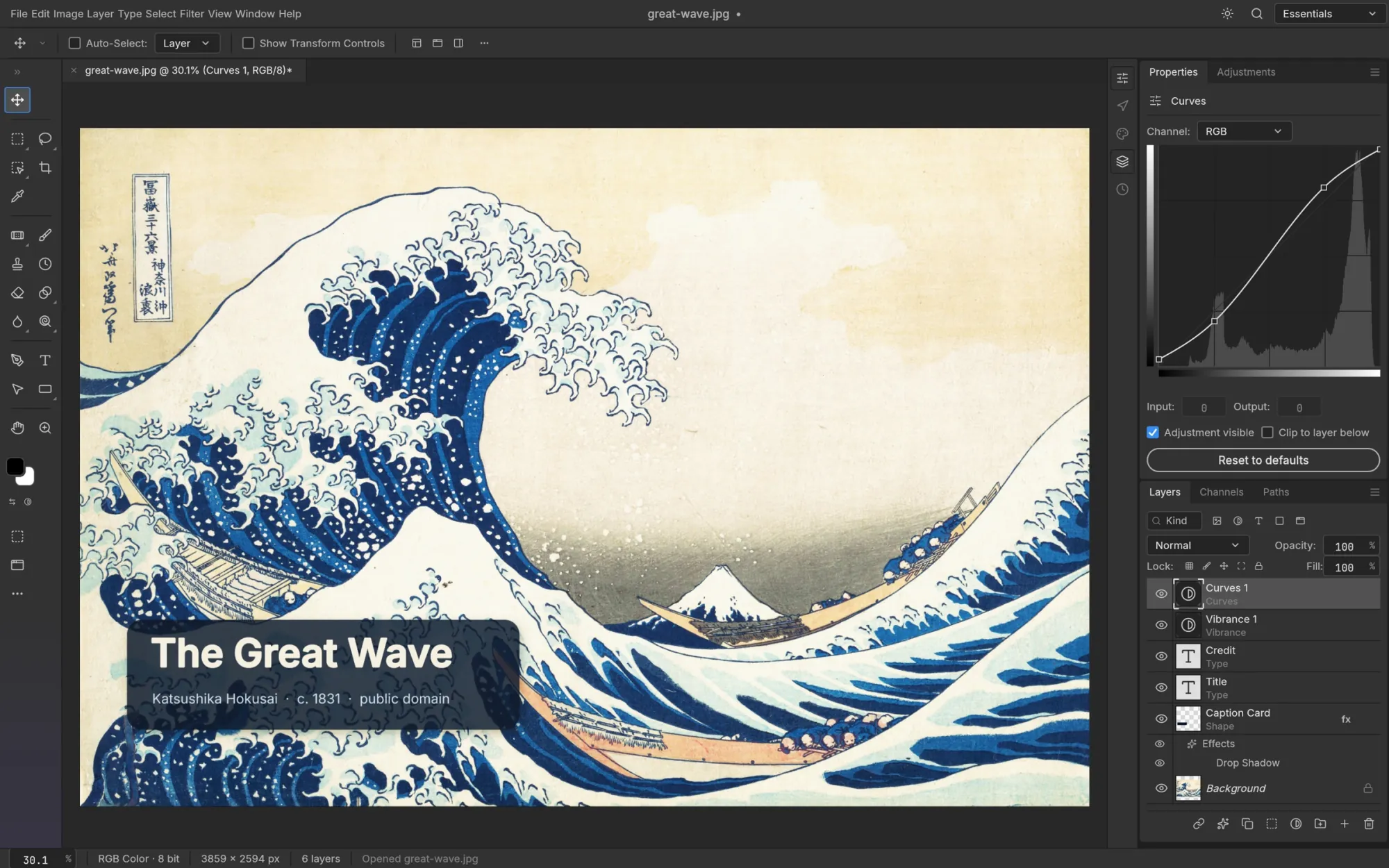
PhotoCraft, the Photoshop clone, is on GitHub. Its README calls it a clean-room reimplementation of Photoshop in pure Rust, built “from public specs and observed behaviour only”, with no proprietary code or assets. It carries the status “early alpha” and says it is “not yet a Photoshop replacement for daily professional work”. It also says it is not affiliated with, sponsored by or endorsed by Adobe, and it is dual-licensed under MIT or Apache-2.0. The page shows about 72,400 stars, though not the date of that count. It does not mention Claude.
The Office follow-up
Thomas later released three apps that imitate Microsoft Office, according to TechSpot: WordCraft (Word), GridCraft (Excel) and DeckCraft (PowerPoint). They read and save the usual .docx, .xlsx and .pptx files. WordCraft runs on Windows, macOS, Linux and BSD, and in a browser, from one Rust codebase. The licence is MIT or Apache 2.0.
The completeness figures are the developer’s own. He says WordCraft covers about 88% of Word’s ribbon commands, GridCraft about 89% of Excel’s commands and 98% of its worksheet functions, and DeckCraft 79% of 191 PowerPoint features. Overall he estimates about 60% parity, with GridCraft about 50% “ready for real work” and DeckCraft about 55%.
How ready is it?
Not very. TechSpot says the Office apps are in alpha and still at “a relatively early stage”. Early users of the Adobe clones reported problems with basic functions. Vice, which relayed other people’s tests rather than doing its own, says the tools “actually feel like their Adobe counterparts” but are “incredibly glitchy”. Thomas himself first said he would reach 100% parity within a month, then said on Hacker News that 99% would take months.
Free alternatives such as GIMP, Krita and Photopea already exist for many tasks.
The “clean room” claim and the legal questions
Thomas describes the work as a clean-room rewrite: built from public file-format specifications and observed behaviour, without copying Adobe’s code. That is his position, not a legal finding. Vice calls the software “legally dubious” and speculates that Adobe’s lawyers could act.
We found no statement from Adobe or Microsoft, and no report of a legal action. We have no legal opinion, so we cannot say whether copying an interface or shortcuts is allowed.
Why he did it
Thomas says Adobe’s cancellation fees were part of his motivation. In June 2024 the US government sued Adobe over allegedly hidden early-termination fees. In March 2026 Adobe agreed to a $150 million settlement, $75 million in penalties and $75 million in free services, while denying wrongdoing, according to TechSpot.
What the viral video gets wrong
The video says a single person “cloned” the whole suite. What the reports support is narrower:
- One developer, with an AI model, published free code for apps that imitate Adobe’s and Microsoft’s. That is true.
- They are alpha software with bugs, and the completeness numbers come from the developer. “Cloned” overstates it.
- The video says the companies’ lawyers must be desperate. We found no reaction from either company.
- The “almost 400 reais a month” price and the “billions” spent are not figures we could verify.
What to watch
The questions are practical. Do the apps open your real files without losing charts and layouts? Do they stay maintained? And will Adobe or Microsoft respond? For now, treat them as projects to watch, not as replacements for work you depend on, and do not install software you have not checked. For more on AI agents doing long, autonomous work, see our report on four Gemini 4 agents completing Minecraft, and on Anthropic’s Claude Duet.
Leave a Reply